Get Full Government Meeting Transcripts, Videos, & Alerts Forever!
Get email alerts on the Housing Policy topic
No spam. Unsubscribe anytime.
Evanston council advances ADU zoning changes on first reading, agrees to add caretaker and occupancy clarifications
Summary
On first reading the council advanced Ordinance 2601 to permit accessory dwelling units in specified residential zones, agreeing to incorporate Planning Commission recommendations and to draft language clarifying owner-occupancy (proposed 'more than 50% of calendar year') and caretaker/hospice exceptions; the ordinance will return for second reading with amended language.
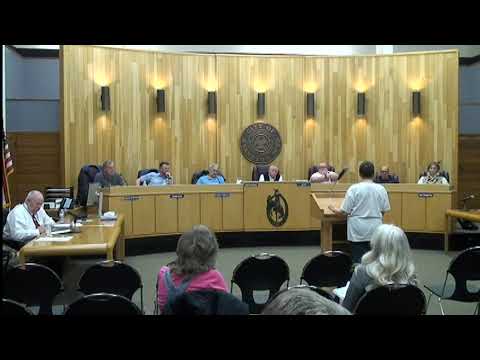
The Evanston City Council voted to introduce and approve Ordinance 2601 on first reading, a text amendment to Chapter 24 of the city code to allow accessory dwelling units (ADUs) in selected zoning districts with specific standards.
Planner Mister Jacobson presented the proposed ordinance, which would permit one ADU per lot for detached single-family dwellings in eligible zones and would exempt attached single-family attached or multifamily lots. Key proposed standards include a minimum ADU area of 190 square feet, a detached-ADU footprint not to exceed 50% of the principal dwelling's footprint or a maximum of 1,200 square feet (whichever is less), up to two bedrooms in an ADU, design and materials that match the principal residence, required setbacks, and an additional paved off-street parking space for an ADU.
Jacobson also outlined proposed additions: applying Appendix BC (tiny houses) of the International Residential Code to detached ADUs between 190 and 400 square feet, clarifying water/sewer service hookups, recording a notice of ADU regulations with the county recorder, and residency requirements. The proposed revisions would add explicit language requiring the property owner to "physically live" more than 50% of the calendar year in either the primary dwelling or the ADU (a recommended replacement to the prior "primary residence" language). Council members discussed whether that threshold should align with tax-code occupancy claims and asked staff to provide clearer draft language for the second reading.
Several council members raised the issue of caretakers and hospice workers. Councilor Hegeman and other members expressed concern that the family-only occupancy definition might prevent nonfamily caretakers from residing temporarily with seniors. Council directed staff to draft a narrow exception or clarification so caretakers who are not family members can reside in an ADU without changing the code's definition of family or causing unintended consequences in other code sections.
Council moved to introduce the ordinance as drafted, to accept the Planning and Zoning Commission's recommended amendments (sections identified in the record), and to bring detailed amendment language back for second reading. The motion passed by voice vote on first reading; the council will review the precise amended language at second reading.