Get Full Government Meeting Transcripts, Videos, & Alerts Forever!
Get email alerts on the Municipal Budget topic
No spam. Unsubscribe anytime.
Box Elder staff recommend balanced 2026 ‘Camry’ budget while flagging cuts to services, police fleet needs
Summary
City staff presented three draft 2026 budgets — an aggressive reserve plan, a recommended balanced “Camry” plan, and a full‑fund request — showing conservative revenue estimates, a proposed reserve policy, and service‑level reductions that would affect road maintenance and police operations if the balanced plan is adopted.
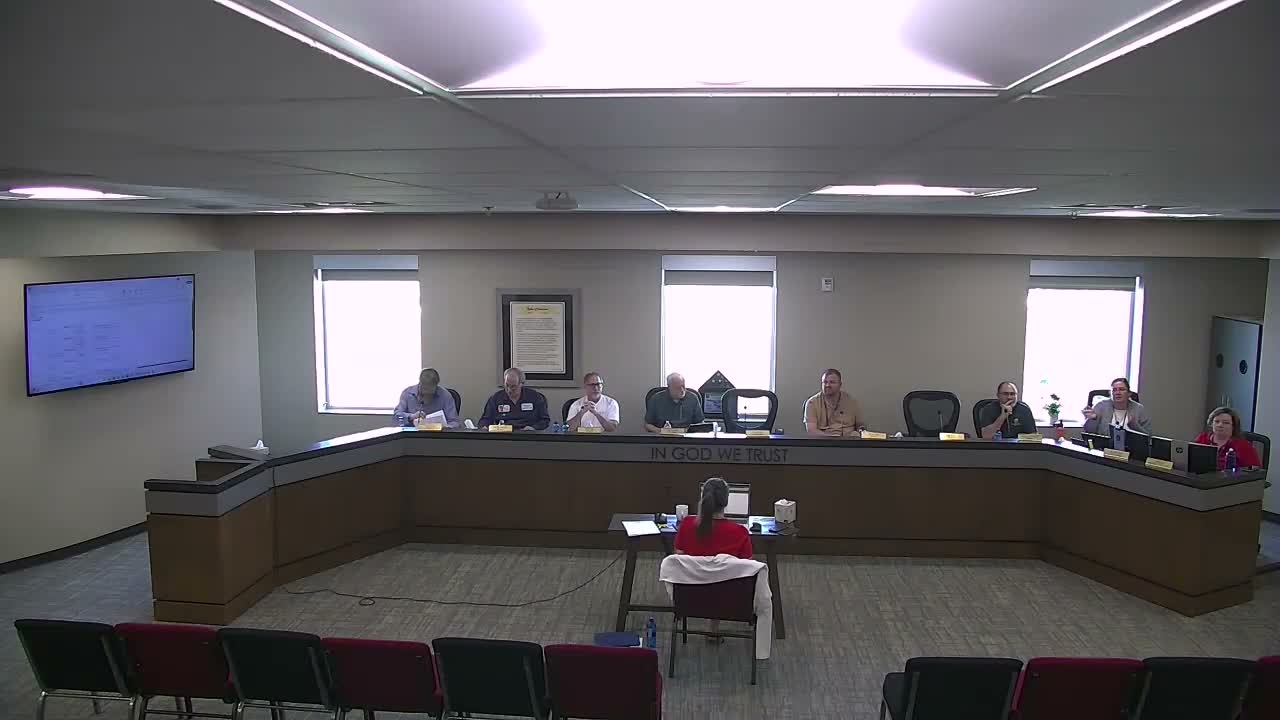
Box Elder City Council held a budget workshop in which staff presented three draft budget scenarios for 2026 and recommended a middle, “Camry” plan that balances operations and modest reserve growth.
The presenter, identified in the record as Renee (finance staff), told the council the package is a draft and recommended conservative revenue assumptions: “This is a draft, so it's not in its final form quite yet,” and staff are moving away from carrying audited prior‑year balances into the operating budget. She said the audited 2024 ending balance was $250,000 and staff estimate a 2025 ending balance of about $376,000; the aggressive plan would add roughly $1.2 million to reserves and target an eventual $1.5 million operations reserve, while the balanced plan would tuck about $200,000 into contingency to push reserves higher without deep service cuts.
Why it matters: the workshop mapped how three choices would affect day‑to‑day services, staffing and capital projects. The balanced plan allows cost‑of‑living adjustments and merit increases for employees while trimming some service levels; the aggressive plan prioritizes rapid reserve growth but would cut many operational services across departments.
Key details
- Revenues and assumptions: Staff signaled conservative property‑tax and sales‑tax projections, citing state growth caps in SB 216. Sales‑tax collections year‑to‑date were described as up versus last year, and staff used a cautiously optimistic 5.7% sales‑tax estimate for 2026 in the recommended plan.
- Fund balances and contingency: The recommended (“Camry”) plan includes a $200,000 contingency line designed to roll into reserves if unused; the strategic (“Geo Metro”) plan places $1.2M in contingency to accelerate reserve building. Staff said a formal reserve and investment policy will be developed as the budget process continues.
- Department impacts: The balanced plan retains staff counts and allows COLA/merit increases but reduces service levels in several departments. Roads maintenance items such as striping and dust control were removed for one year in the balanced plan; staff characterized those as manageable one‑year deferrals but said some operations (e.g., noncritical fleet replacements) would be postponed.
- Police operations and fleet: Police staff warned of aging fleet concerns that could reduce visible patrol presence if vehicles are kept longer. A police representative, Bob (police department staff), said: “Out of 20 vehicles in the police department fleet, I have 7 that are over 100,000 miles. One is over 170,000 miles,” and added that reductions could also affect recruiting and retention. Bob discussed a proposed narcotics K‑9 supported largely by a DCI grant for one‑time setup costs; he estimated ongoing care at roughly $1,700 a year.
- Enterprise funds and transfers: Staff proposed using remaining water loan repayments and limited one‑time enterprise fund transfers in some plans; water and wastewater funds are projected to remain healthy (water ~ $1.8M estimated 2025 ending; wastewater ~ $1.3M). Staff noted the city will apply a statutory allowable 4% user‑rate increase for water in 2026.
- CIP and debt issues: Capital projects reviewed include a city hall generator (FEMA partly funds, city share ~$10,000), emergency siren relocation (cost share with the county), sidewalks (TA grant) and major road schematics tied to TIF planning. Staff warned of a large balloon payment tied to BID 2 in 2029 and said refinancing is under review.
Quotes and exchanges
- On the draft status and process, Renee said the workshop “is a draft” and urged council to view mid‑year amendments as the point to restore cut items if revenues are stronger than forecast. "That's the time that we'll use it as kind of like a mini budget and bring back a lot of the items that... were first cut," she said.
- On police fleet and service tradeoffs, Bob cautioned: “We're going to lose officers because... they believe that the city doesn't have cash,” and said the department has reduced crime but needs reliable vehicles to sustain operations.
Decisions and next steps
No final budget vote occurred at the workshop. Staff indicated the first reading of the budget is expected at the first council meeting in November and that a required public hearing will be scheduled before adoption. Staff said they will continue refining numbers and bring back adjustments in October and at mid‑year if revenues permit.
What remains unresolved
- Final COLA/COLA choice for 2026 (three scenarios show 3%, 2.7%, or 0% COLA with differing merit assumptions). The council expressed a preference for a middle approach.
- Specific timing and financing approach for large CIP items (Cheyenne Boulevard design and a $20M balloon refinancing tied to BID 2 were discussed but not resolved).
The council adjourned after the workshop without a vote on the budget; staff will return with a refined draft and schedule the public hearing and first reading later this fall.