Lifetime Citizen Portal Access — AI Briefings, Alerts & Unlimited Follows
House Homeland Security subcommittee hears Coast Guard on specialized forces, asset shortfalls and tanker boardings
Loading...
Summary
The House Homeland Security Subcommittee examined the Coast Guard’s deployable specialized forces (DSF), GAO warnings about staffing and asset readiness, and recent boardings of tankers tied to sanctioned Venezuelan oil. Members requested classified briefings and pressed for prompt use of congressional funding under Force Design 2028.
The House Committee on Homeland Security’s Subcommittee on Transportation and Maritime Security convened on Feb. 5 to examine the Coast Guard’s deployable specialized forces and their role in countering maritime narcotics trafficking, sanctioned oil shipments and other threats.
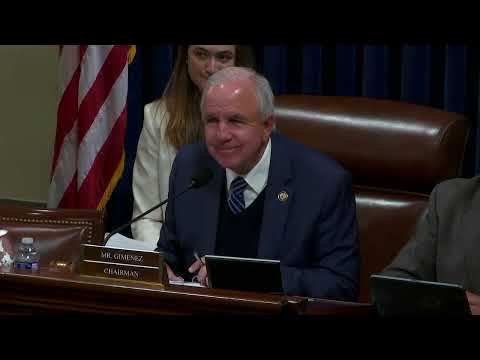
Chairman Jimenez opened the hearing by saying the session would focus on DSF capabilities and operational demands and linked recent operations near Venezuela to the subcommittee’s work. “Purpose of today's hearing is to examine the capabilities, readiness, and operational demands of the coast guard's deployable specialized forces,” he said.
Rear Admiral David Barrotta, deputy commandant for operations policy and commander of the Eighth Coast Guard District, described DSF units as versatile, rapidly deployable teams used for tasks ranging from maritime counterterrorism to tactical law enforcement. Barrotta said the service conducted several law-enforcement boardings of so-called “dark fleet” tankers and highlighted what he described as the largest annual maritime drug interdiction in service history in fiscal year 2025.
Heather McLeod, director on the Homeland Security and Justice team at the Government Accountability Office, presented GAO’s findings that staffing shortfalls, declining cutter and aircraft availability, and acquisition delays are constraining Coast Guard operations. “At the time of our review, the Coast Guard was short of its authorized positions,” McLeod said.
Members pressed witnesses on operational security, interagency coordination and funding. Representative Troy Carter asked whether operational video released publicly was being reviewed to avoid revealing tactics or operator identities; Barrotta said much footage is reviewed but that not all is and that content is routed through the White House for processing. Members also sought a classified briefing on recent tanker boardings and on contingency plans after an episode involving the tanker Bella 1 (later renamed the Marinara) that briefly evaded U.S. forces.
Lawmakers pressed for prompt obligation of congressional funding provided in recent legislation and for a unified DSF command under Force Design 2028. Barrotta said Force Design 2028 envisions a substantial growth in personnel and a command element to improve manning, training and equipping of specialized forces.
The subcommittee held the record open for 10 days for members to submit additional questions and responses and adjourned without a formal vote.
The subcommittee’s next steps include follow-up classified briefings and written responses from witnesses on requested policy and operational documents.