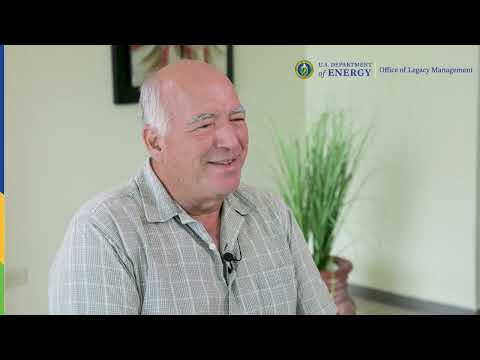
Former authority employee recounts history of decommissioned nuclear demonstration plant turned museum and warns original records were mishandled
Loading...
Summary
An unnamed former Puerto Rico Electric Power Authority employee described the plant’s history, remediation and museum conversion, cited a 1975 health study finding no clear increase in cancer, and warned that original archival logbooks were improperly digitized after transfer to the Department of Energy.
A former Puerto Rico Electric Power Authority employee who spoke in a public forum recounted decades of work on a small demonstration nuclear reactor that was later decommissioned and converted into a technology museum, and raised concerns that the site’s original archival documents were mishandled during digitization.
The witness, identified only in the transcript as S1, said he joined the authority on Dec. 16, 1978, worked at the Palm Seco thermal plant and later moved in 1989 to the authority’s environmental division, where he participated in environmental assessments and decommissioning preparations. "Entré a la autoridad eléctrica, eso fue diciembre 16" (SEG 001) and later described the environmental and underground-tank work that followed.
S1 outlined the plant’s engineering and safety features — a domed containment, negative internal pressure, double-entry doors and automatic water sprinklers — that were part of its operational design and later guided remediation. He said the basement was remediated in 2005 by adding several inches of concrete to encapsulate removable contamination and prepare the space for museum displays.
The witness described the museum’s creation, saying a consultant (named in the transcript as Olayagasti) organized exhibits by theme and that guided tours were controlled and educational: "recibió en un verano 1500 estudiantes... tuvimos que... atender grupos de 75" (SEGs 353–380). He said the legislature recognized the site as a historic technology museum and that some original equipment preserved on site is rare.
On public health, S1 referred to a 1975 epidemiological study conducted by the Puerto Rico Department of Health that compared municipalities including Rincón and reported similar cancer rates across the studied areas. "En el 75 hubo un estudio... donde se evaluó los diferentes pueblos y se comparó con Rincón... la cantidad de niveles de cáncereras, más o menos igual" (SEGs 655–665), a point he cited in arguing the plant had not demonstrably harmed community health in a way the study captured.
S1’s clearest concern involved archival stewardship after the site’s documents were transferred to the Department of Energy. He said original logbooks and technical manuals were removed for digitization but criticized the digitization method: "Ponían los logbooks, no abrían, entonces ahí están en la página" (SEGs 514–517) and urged that originals be preserved or returned so the site could support future historic designations and research. He said copies had been given to three institutions (the Department of Energy archive, the Rincón library and the legislative assembly), but warned many originals and photographic prints remain unprocessed or missing.
The witness described interactions with federal program offices and management transitions (including a transfer to what he called "Legacy Management") and said some supervisors changed direction for museography and records handling. He also related a visit by a nuclear regulatory commissioner (named in the transcript as "Maryfield") who was impressed by the facility and its exhibits (SEGs 571–576).
S1 also reviewed experiments with renewable and alternative energy at other island sites — noting a small solar plant in Juana Díaz that produced approximately 90 kilowatts at peak and averaged roughly 30 kilowatts annually (SEGs 287–291) — and discussed failed or incomplete projects, procurement practices and finance constraints (including a referenced insurance figure of about $240,000,000 needed for a proposed project).
No formal vote or policy decision was recorded during this testimony. The speaker offered to answer follow-up questions and urged careful archival stewardship to preserve evidence needed for future historic designations or technical study.