Senate panel advances bill to limit first responders’ release of crime‑scene images
Loading...
Summary
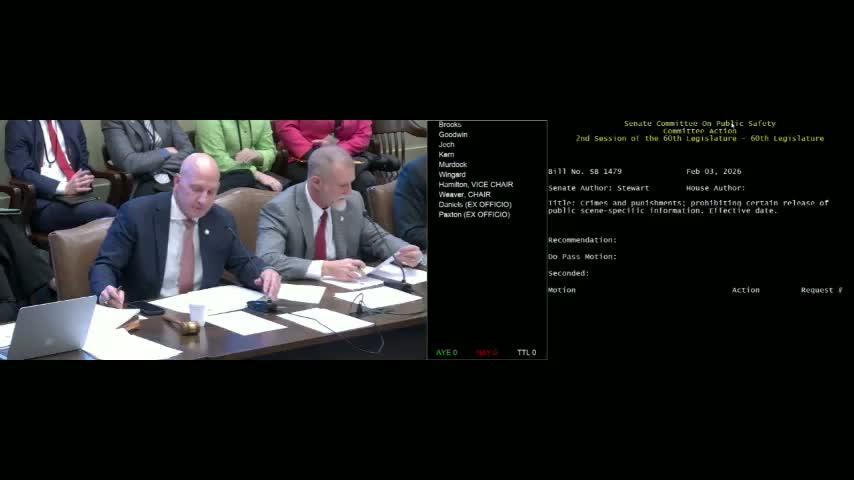
The Senate Public Safety Committee passed Senate Bill 1479 on a 6–2 vote. The bill, offered by Senator Stewart, would bar first responders and other scene‑support personnel from publicly releasing crime- or collision-scene photos or footage until the investigating agency authorizes it; supporters cited family privacy and investigative risks while some members sought narrower language and clarified exceptions.
Senator Jake Stewart’s Senate Bill 1479 was advanced by the Senate Public Safety Committee after extended debate over who the law would cover and how it would affect investigations and agency policies.
Stewart told the committee the bill — drafted at the request of the Oklahoma Highway Patrol — would “protect crime and collision scene specific information from being released before the investigating agency is prepared to release the information” and reduce the chance that families or victims see graphic images online before notification. The author said the maximum penalty was reduced from a year to 60 days at the judge’s discretion.
Major Preston Lay, legislative liaison for the Oklahoma Highway Patrol, testified that some first responders have posted evidence images to social media and that such posts can jeopardize jury pools and investigations. “There has been issues in certain parts of the state where some first responders will take certain photos of crime scene evidence and then place that evidence on social media, which could jeopardize potential jury members,” Lay told senators.
Committee members repeatedly asked about scope. Senator Goodwin pressed whether the bill would apply to off‑duty employees, private contractors and towing companies; Stewart said the intent is to cover “first responders of any sort” who are permitted behind the tape and to secure scene‑specific information until investigators clear it. Several senators sought clearer language and limits. The chair and the author agreed to strike the bill’s title and work with colleagues to refine who is covered and the employment‑scope exceptions before the bill moves to the floor.
Supporters framed the bill as protecting families and preserving the integrity of investigations; critics warned the measure could be overbroad unless the language is tightened. The committee ultimately recorded 6 ayes and 2 nays and declared the bill passed out of committee. The bill will go to the full Senate next.