Get Full Government Meeting Transcripts, Videos, & Alerts Forever!
Get email alerts on the Land Use Cup topic
No spam. Unsubscribe anytime.
Ombudsman trains Grand County commissioners on conditional use permits and evidence standards
Summary
Jordan Collemore of the Utah Ombudsman's Office led a workshop explaining the difference between legislative and administrative land-use decisions, the substantial-evidence standard for conditional use permits and best practices for recordkeeping and conditions.
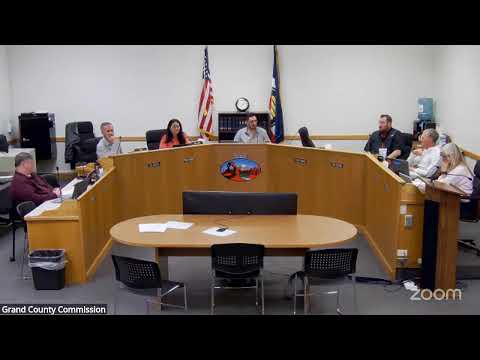
Jordan Collemore, lead attorney with the Utah Ombudsman's Office, led a 3 p.m. workshop for the Grand County Commission focused on conditional use permits (CUPs) and the legal standards that govern administrative land-use decisions. Collemore said CUPs are administrative, not legislative, decisions and must be decided according to existing law, local ordinances and the substantial-evidence standard.
Collemore told the commission they must document factual findings, cite evidence such as traffic or engineering studies when a proposed use raises concerns, and state proposed conditions and the legal conclusions that support them so a court can follow the agency's reasoning. He noted objective standards in the county code are important to guide conditions and to avoid broad, subjective criteria that courts might view as unchecked discretion.
Commission counsel and planning staff discussed how public testimony alleging safety issues should be weighed against technical evidence from experts such as UDOT or traffic studies. Collemore said public concerns are part of the record but that the land-use authority must rely on credible, relevant evidence to support any factual determinations or conditions.
Collemore recommended regular code reviews so the list of permitted and conditional uses reflects community priorities and legal realities, and urged commissioners to "show your work" by putting conditions, supporting exhibits and findings into the final decision record.
The workshop was prompted by several CUP applications expected at upcoming meetings; commissioners asked for follow-up materials and Collemore agreed to supply slides and contact information for further questions.