Get Full Government Meeting Transcripts, Videos, & Alerts Forever!
Get email alerts on the Budget topic
No spam. Unsubscribe anytime.
Weston School District reviews proposed FY27 budget; special education, ELC expansion, substitutes and technology drive discussion
Summary
At a Jan. 14 public forum, district staff presented the proposed FY27 budget and answered board questions on special education enrollment and in‑district programming, ELC expansion and tuition, substitute staffing and pay, technology replacements and testing costs; no formal policy votes were taken.
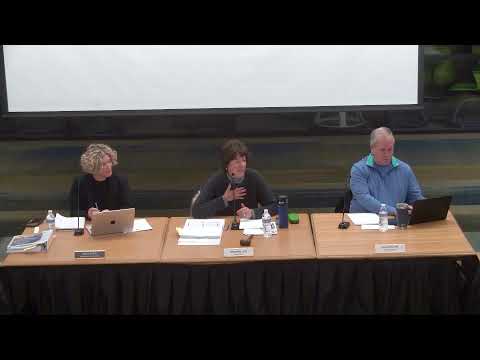
Weston — The Weston School District presented responses to more than 50 board-submitted questions during a public forum on Jan. 14 that focused on special education programming, early-childhood capacity and tuition, substitute staffing and technology replacement in the proposed fiscal year 2027 budget.
"I'm here tonight to ask that you honor and maintain the current student to teacher ratios in our elementary schools as you finalize next year's budget," said Kelly James, a parent, during the public-comment period, urging the board to protect elementary class sizes.
Dr. Edwards, who led the special education portion of the forum, told the board that special education enrollments have increased in recent years — "rising from 249 students in 2018 to 323 students in 2024" — and credited expanded in-district programming with reducing out-of-district tuition costs for five consecutive years. Dr. Edwards said the proposed FY27 budget recommends maintaining the district's current levels of certified and non-certified special education staff to sustain those programs.
Staffing details presented included four school psychologists (one per school), five social workers (one additional social worker dedicated to the high school Pathways program), and an average high-school counselor caseload of about 148 students. Dr. Edwards said the Pathways program, described as a "school within a school" for students with complex internalizing needs, uses partial FTEs for four core content teachers; the program's social worker currently supports 15 students.
The district also described specialized roles serving transition-age students: the transition coordinator currently provides group services to nine students and individual services to 17, and the part-time vocational specialist provides group and 1:1 supports to roughly 10 students, including job coaching and supervised community experiences.
On preschool and early learning, staff reported a record 55 lottery applicants for the Early Learning Center (ELC) and a planned expansion from four sections to five for the coming year. Staff said projected class sizes for the ELC will be "approximately 14 students per class." The presentation included a five-year look at ELC tuition: $7,118 (FY23), $8,039 (FY24), $8,277 (current year) and a FY27 placeholder of $9,277; a board member noted the budget book lists $8,525 for FY27, and staff said the $9,277 figure is a planning placeholder.
Substitute staffing and pay were discussed in detail. Julie, a district administrator, explained the difference between daily substitutes, building (permanent) substitutes and long-term substitutes and provided pay and benefit information: "Our daily substitute teacher rate ... is $123 a day," the administrator said, and building substitutes are paid $130 a day and become eligible for employee-only health benefits after a 90-day probationary period; the substitute para-educator hourly rate is $16.94. Staff emphasized the district manages substitutes as a single pooled budget that is reallocated among daily, building and long-term needs.
On finance and operations, staff said recent increases in electricity delivery charges from Eversource were partially offset by a new fixed contract on the supply side and projected lower natural gas contract rates, allowing the district to hold certain FY27 lines roughly at FY26 levels. The administration also flagged a mid‑thirty-thousand-dollar increase tied to a new health-insurance consultant fee that had not been budgeted in FY26.
In technology, Dan DeVito explained the district's practice of leasing major hardware on four rolling 48-month leases and said the current staff laptops are five years old and "nearing the end of their functional life." DeVito noted multiple work orders and device failures and said the FY27 request includes $370,000 for staff laptops with an actual FY27 budget impact of slightly under $100,000. He also said the FY27 technology request contains a $12,000 placeholder for a possible AI subscription pending the district AI advisory committee's recommendation.
Curriculum staff reported the district's testing budget has decreased by about 11% (approximately $16,000) year to year. The testing line covers NWEA, the state-mandated literacy screening (DIBELS 8 for K–3), Naglieri for gifted identification and other assessments tied to special education and multilingual programming.
Several board members asked for follow-up documentation, five-year trend data and charts; staff said written responses and supporting charts will be posted on the district budget page after the materials are finalized. No formal board votes on policy or budget adoption occurred at the session. A motion to adjourn was made, seconded and the meeting concluded with the board scheduling a continuation for the following morning at 9 a.m.
What happens next: the board will continue reviewing remaining questions at the scheduled follow-up meeting and will post written Q&A and supporting documents on the district website as they finalize responses.