
Governor DeSantis backs plan to redevelop HCC Del Mabry campus as proposed Tampa Bay Rays ballpark
Get AI-powered insights, summaries, and transcripts
Subscribe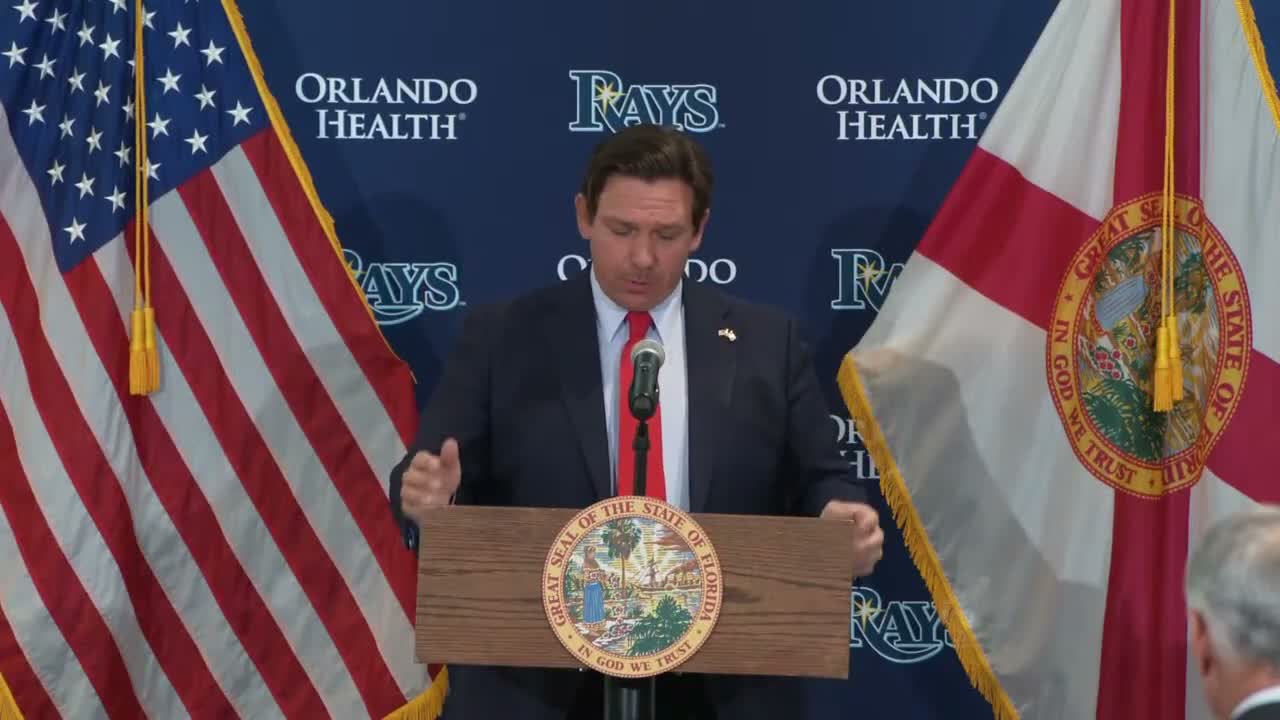
Summary
Governor DeSantis announced state support for a proposal to use the Hillsborough Community College Del Mabry campus as the site of a new Tampa Bay Rays ballpark, joined by MLB Commissioner Rob Manfred, HCC President Atwater and the Rays' ownership group. Speakers emphasized local economic and workforce benefits; funding, transportation and exact terms remain under negotiation.
Governor DeSantis announced state support for a proposal to redevelop the Hillsborough Community College (HCC) Del Mabry campus as the site of a new Tampa Bay Rays ballpark, saying the state will convey the land to the college so it "will be able to negotiate use with the Rays." The event in Tampa included Major League Baseball Commissioner Rob Manfred, HCC President Atwater and representatives of the Rays' new ownership group.
"The state is gonna be supporting this proposal to use this HCC location to be the site of the new stadium," DeSantis said, framing the project as part of a broader plan to "reimagine" campus facilities and drive local economic activity. HCC President Atwater told the audience the college's board "voted unanimously to approve a memorandum of understanding with the Tampa Bay Rays" authorizing pursuit of a partnership to redevelop the Del Mabry campus and expand curriculum and workforce-development opportunities for the college's roughly 46,000 students across its campuses.
Commissioner Rob Manfred said Major League Baseball "belongs in Tampa Bay" and praised the local ownership group's roots and commitment to building a durable franchise. An ownership representative described the project as a mixed-use redevelopment and told the room the proposal would generate "more than $34,000,000,000 of economic impact to our community here in Tampa," a figure the spokesperson attributed to the ownership group's economic projections and that was not independently verified at the event.
On funding, DeSantis said negotiations remain ongoing between the Rays and local governments. Asked whether the state would levy new taxes to help pay for the project, he replied, "We're not doing any taxes at the state level," and added that the legislature would consider any appropriation requests. DeSantis suggested some state maintenance funds could be reallocated to support campus reimagining rather than rehabbing older buildings, but he did not describe specific appropriation amounts or a final financing package.
Transportation questions included whether Brightline or other private rail service would be extended to the site. DeSantis called Brightline a private enterprise and said private operators must decide on financing; he warned that a government-built bullet train could "hemorrhage money," and said the state would focus on highways and ingress/egress improvements as needed.
DeSantis and others said the land is state-owned and would be conveyed to the college. When asked about the site's size, DeSantis said "the 113 acres" would qualify for opportunity-zone treatment and that current market value was not known, but that the site’s value would rise if the vision comes to fruition.
No formal votes, approvals or final funding commitments were taken at the event. DeSantis closed by saying more developments are expected "in the ensuing days, weeks, and months," and the owners said they will release renderings and engage in community conversations before any final agreements are reached.
The announcement represents an early public stage of a proposed public-private partnership: speakers emphasized potential benefits—workforce programs, campus renewal and regional economic activity—while many procedural details including precise funding sources, legal agreements and timelines remained to be negotiated.