
Senate Commerce Committee Urges Congress to Set National Rules for Autonomous Vehicles
Get AI-powered insights, summaries, and transcripts
Subscribe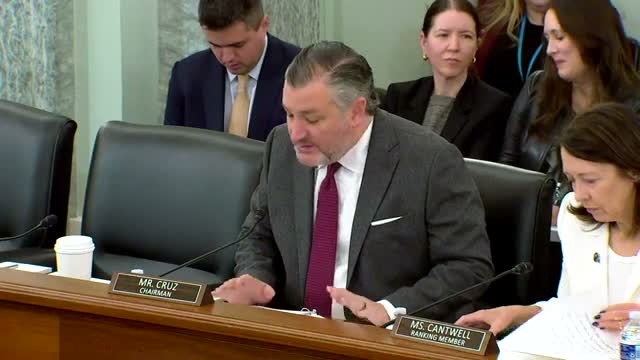
Summary
Senate Commerce Committee members and industry witnesses urged Congress to adopt a national framework for autonomous vehicles in the surface transportation reauthorization bill, emphasizing a safety‑case approach, data reporting to NHTSA, and stronger agency capacity while experts warned against unchecked preemption of state authority.
Chairman Cruz opened a Senate Commerce Committee hearing by saying "America is at a crossroads in transportation policy" and urging lawmakers to use the surface transportation reauthorization bill to "create a national standard for AVs." Witnesses from Tesla, Waymo, the Autonomous Vehicle Industry Association and an academic warned that without federal rules the United States faces a patchwork of state laws that could undermine safety and innovation.
"For America to lead in AV technology, we must modernize regulations," Lars Moravi, vice president of vehicle engineering at Tesla, told the committee. Moravi argued that federal action is needed so companies have consistent design and deployment requirements and industry can scale U.S. manufacturing.
Mauricio Pena, chief safety officer at Waymo, said his company27s data show substantial safety benefits in deployment areas, reporting that Waymo has driven hundreds of millions of fully autonomous miles and served millions of trips. "To win, the U.S. needs a predictable, durable, national regulatory framework that sets a high safety standard based on a safety case," Pena told senators.
Industry representatives recommended three principal elements for federal legislation: requiring manufacturers to file a safety case documenting why a vehicle is safe, creating a national AV safety data repository managed by NHTSA, and modernizing vehicle performance standards intended for human drivers so they are compatible with automated systems.
"We need action from Congress in these areas," Jeff Farah, CEO of the Autonomous Vehicle Industry Association, said, urging lawmakers to "raise the bar on safety" while enabling companies to innovate. Farah described a federal framework that complements state deployment statutes and gives NHTSA authority and resources to oversee AV safety.
Not all witnesses or senators favored the same scope of federal preemption. Professor Bridal Walker Smith, who researches transportation law, cautioned that preemption of state and local authority could be "profoundly shortsighted," arguing that local governments and first responders possess operational knowledge essential to safe deployments. "Preempting state and local authority would be profoundly shortsighted," Smith said, urging federal leadership that empowers communities rather than disempowers them.
Ranking Member Cantwell pressed the need to rebuild agency capacity, saying NHTSA has lost specialists and has launched fewer recall investigations in recent years. Cantwell repeatedly urged that strong federal oversight be paired with the resources and expertise necessary to enforce safety standards.
Senators asked a range of follow-up questions about enforcement, data privacy and liability. Several members expressed support for including an AV title within the surface transportation reauthorization bill and set deadlines for written questions and witness responses after the hearing.
The committee did not vote on any legislative language during the hearing; senators and witnesses left open negotiations over specific statutory text, enforcement mechanisms and the balance between federal standards and state roles. The hearing record remained open for written questions; senators have until Feb. 11 to submit questions for the record and witnesses until Feb. 25 to respond.