
Administration touts EPA and DOE actions, $625M funding and fast reviews to keep coal plants online
Get AI-powered insights, summaries, and transcripts
Subscribe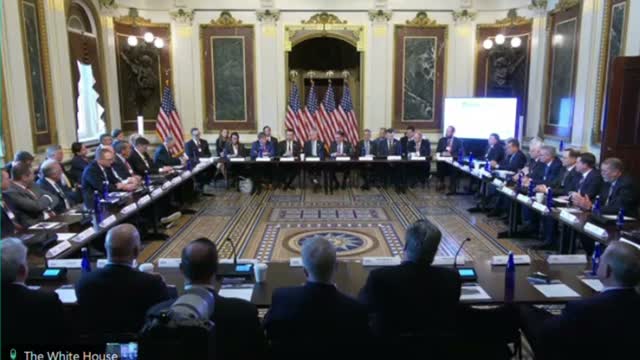
Summary
EPA and DOE officials at the White House meeting described deregulatory steps, compliance‑deadline extensions and $625 million in funding opportunities to support coal plants, while EPA said several rule changes remain proposed and in public comment.
Federal officials used the reconstituted National Coal Council meeting to outline agency actions and funding meant to stabilize coal‑fired generation.
David Fatui, deputy administrator of the Environmental Protection Agency, listed a string of proposed deregulatory steps: under the Clean Air Act the agency has proposed removing certain greenhouse gas compliance burdens for power plants; it has also proposed repeal of 2024 amendments to the Mercury and Air Toxics Standards (MATS). Under the Clean Water Act, EPA announced extended compliance deadlines for some wastewater rules affecting coal plants and proposed changes to the 401 water‑quality certification program. Fatui said a November proposal under the Resource Conservation and Recovery Act would extend closure dates for certain coal combustion residuals (CCR) surface impoundments to 2031 if finalized; that comment period has closed and EPA said it intends to take final action soon.
DOE officials emphasized administrative speed: one speaker said the Department of Energy has kept "17 gigawatts of coal generation open today that would not have been open," credited faster environmental assessments and environmental impact statements completed in days rather than years, and said DOE is pairing those outcomes with funding and lab resources. The DOE speaker also announced $625,000,000 in funding opportunities to support plant upgrades, reopen shuttered plants and expand research, and named the National Energy Technology Laboratory as a new center of excellence for coal research with a February 5 tour in Morgantown, West Virginia.
Pressed by reporters on plant retirements and investor litigation, officials said lawsuits seeking divestment by institutional investors would be appealed and litigated and that the administration aims to prevent politically driven closures. When asked whether the administration will continue invoking 202c emergency orders, officials said the long‑term goal is to make those emergency orders unnecessary by stabilizing market and regulatory conditions.
What this does not do: EPA and DOE officials described proposals and ongoing rulemakings; no final regulatory decisions were announced at the meeting. The CCR and other actions referenced remain in proposal or comment stages according to the officials who spoke.
Next steps and oversight: Industry and agency staff were invited to submit specific regulatory barriers and permitting problems immediately so federal staff can act quickly rather than waiting for the council reports; agencies said they will use delegated state authority (for example CCR permitting) where appropriate to speed approvals.