Ottumwa district projects healthy reserves but warns legislators’ SAVE proposals could be ‘catastrophic’
Loading...
Summary
District leaders told the board the general fund and capital accounts are in strong long‑term positions—general fund just under $71 million, state aid about $51 million (73%)—but cautioned that proposed state changes to SAVE and PEPL funding would sharply reduce local capital capacity.
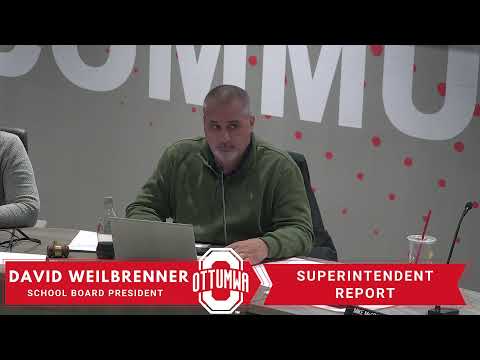
Superintendent Mike and John, the district’s school business officer, told the Ottumwa Community School District board that both the general and capital funds are currently in strong positions but flagged pending state proposals that could reduce sales‑tax (SAVE) and PEPL resources.
John said the district’s current general fund budget is just under $71,000,000 and that about 73% of annual revenue—roughly $51,000,000—comes from state aid, with local property tax contributing about 16% and federal/other revenues making up the remainder. He said the district has adopted intentionally conservative forecasting assumptions after a recent enrollment dip, using 0% enrollment growth and a 2% state supplemental assumption in long‑range models.
Leaders described several indicators of fiscal health: an unassigned general fund balance projected near $11.2 million for the current year, a targeted solvency ratio of 10–15% (the district is currently above that target), and a multi‑year approach that avoids reliance on one‑time grants. John also reviewed staffing and operational drivers—75% of expenses are staffing—and recent increases in certified and associate FTEs to support programs.
On the capital side, John said roughly 77.5% of the district’s capital funds come from the SAVE sales‑tax pool and just under 19% from the Physical Plant and Equipment Levy (PEPL). He outlined planned projects funded from those sources, including classroom remodels, window replacements (preliminary estimate $1,000,000) and a Tomahawk baseball and softball complex (preliminary estimate $5,000,000). The district projects capital reserves will stay between about $4 million and $10 million over the next six years while continuing annual allocations of $1.5–$2.0 million for maintenance and upgrades.
John described the district’s debt strategy: the district finances large projects primarily with sales‑tax revenue bonds (not property‑tax‑backed general obligation bonds), and said conservative debt‑service coverage ratios leave capacity for future issuances if needed. He also noted that S&P Global had reaffirmed the district’s rating and stable outlook.
Both presenters warned that several pieces of pending legislation could materially affect those projections. Superintendent Mike said proposals to reallocate SAVE revenue (one cited proposal would move 50% of SAVE to a property‑tax reform pool), reduce the PEPL rate and limit management fund reserves would ‘‘devastate school districts’’ and could be ‘‘catastrophic’’ if enacted as written. John added that many districts have borrowed against future sales‑tax revenues and an abrupt reallocation could impair debt service and project funding.
The board asked clarifying questions about timing and sensitivity; John said a sustained reduction in state supplemental aid or major SAVE reallocation would begin affecting solvency ratios immediately, though the district’s current reserve position would blunt short‑term emergency impacts. He urged board members and community stakeholders to engage with legislators about the possible consequences.
Next steps: administration said it will continue to update the board as legislative language and state allocations become firm and will provide targeted scenarios showing the budgetary impact of specific proposals.