Get Full Government Meeting Transcripts, Videos, & Alerts Forever!
Get email alerts on the School Safety topic
No spam. Unsubscribe anytime.
Subcommittee refers permissive 'Alyssa's Law' wearable alarm bill to appropriations
Summary
House bill 592, a permissive grant program to allow school divisions to adopt wearable panic alarms that can alert 911 and trigger emergency response, was reported and referred to Appropriations after survivors' family testimony and broad stakeholder support.
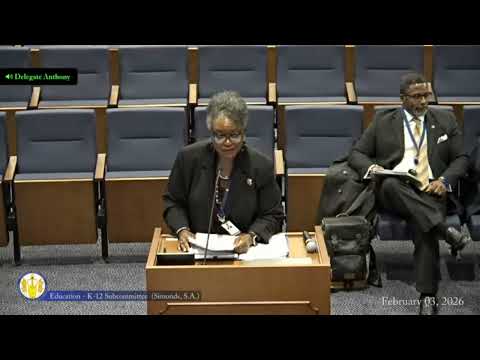
Delegate Simons presented HB592 to permit school divisions to provide wearable panic alarm systems that can directly alert 911 and initiate schoolwide emergency responses; the measure establishes a DOE grant program to prioritize divisions with greatest need and is framed as permissive (not mandatory).
Lori Alda, Alyssa Alhadeff’s mother and founder of Make Our Schools Safe, gave emotional in‑person testimony urging passage: "Time equals life," she said, recounting the Parkland shooting and urging the committee to pass the measure. Education associations, municipal groups and counties testified in support. Several witnesses stressed the bill is permissive and paired with targeted grant funding so localities with highest need could access equipment.
The committee voted unanimously to report HB592 and refer it to Appropriations (10–0).
What’s next: Appropriations will review the grant program design and any funding source; if funded, DOE would administer the grant program and divisions could opt in to implement wearable alarms.