
Russian startup says it implants chips in pigeons; scientists emphasize limits and ethics
Get AI-powered insights, summaries, and transcripts
Subscribe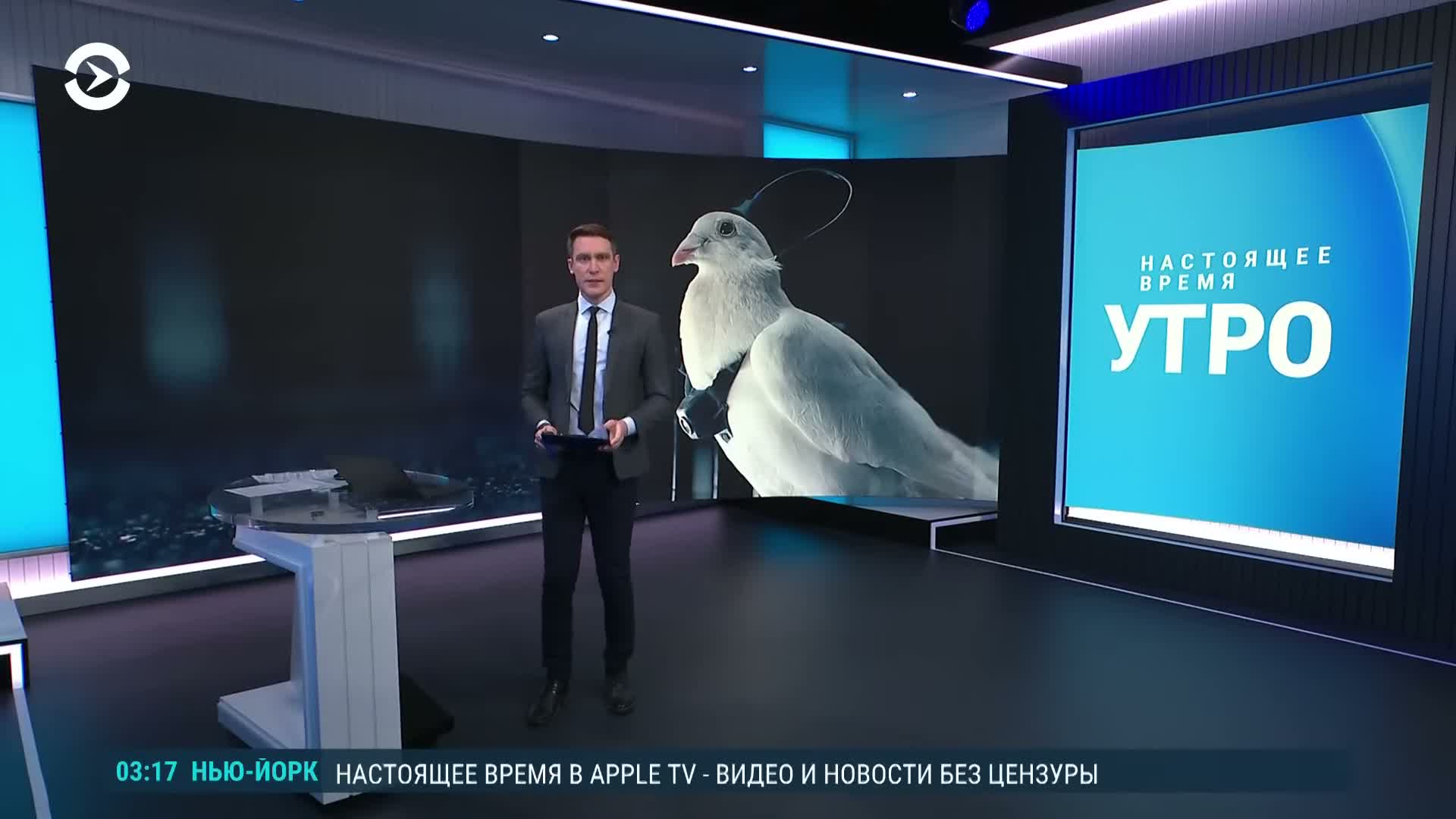
Summary
A Russian company (named in the broadcast as Nairy/Nari Group) claims to have implanted neural interfaces in pigeons to steer flight; a guest scientist on the program said the technology may support reconnaissance or industrial inspection but faces major technical, ethical and scaling limitations and that some founder statements are ethically troubling.
A Russian startup the broadcast identified as Nairy (also referred to as a group of companies) says it has implanted neural interfaces in pigeons to allow remote guidance of flight, and aired footage it said showed test flights in November 2025. The company claims dozens of birds have been fitted with implants and suggests civilian uses such as industrial and environmental monitoring or search-and-rescue.
Alexander Sergeev, editor of a popular science magazine who appeared on the program, told the hosts the company officially denies military aims but that technical and ethical questions remain. Sergeev said payload limits (about 30 grams of equipment) constrain what a pigeon can carry, making heavy weaponization unlikely, though reconnaissance uses are conceivable. He referenced earlier experiments in China and with rodents as precedent for steering animals but emphasized that decades of laboratory work have not produced widespread operational military applications.
The broadcast reported that the company attracted large sums during its existence — the program cited figures approaching 'about a billion rubles' overall and said 360 million rubles came from the National Technological Initiative, an NGO created by government decree, with additional investment from a fund associated with oligarch Vladimir Potanin. The program also named the Institute of Artificial Intelligence at Moscow State University and said that laboratory work there is linked to the company; the broadcast named Katerina Tikhonova as heading the institute and identified a laboratory led by candidate of biological sciences Vasily Popkov that participated in experiments with rats.
The hosts read excerpts from public posts by the company's founder, Alexander Panov, in which he speculated provocatively about selling people to the state and 'reprogramming' populations; Sergeev condemned the rhetoric and said such statements are ethically troubling even if some researchers involved are serious scientists.
On air, Sergeev emphasized three points: (1) technical limits — pigeons can carry only limited payloads so practical "combat" uses are constrained; (2) operational challenges — keeping, training and handling live animals at scale poses logistical hurdles that differ from conventional drones; (3) ethical concerns — invasive neural interfaces in animals raise humane and research‑ethics questions, and public statements by the company founder increase scrutiny of motives and oversight.
The program did not report any official military contracts or government confirmation of weaponization; it presented the company's claims, independent expert skepticism, reported funding links, and flagged ethical and transparency concerns. The segment closed with hosts urging viewers to follow developments and experts to seek clearer accounting of funding and research purposes.