Get Full Government Meeting Transcripts, Videos, & Alerts Forever!
Get email alerts on the Policy Updates topic
No spam. Unsubscribe anytime.
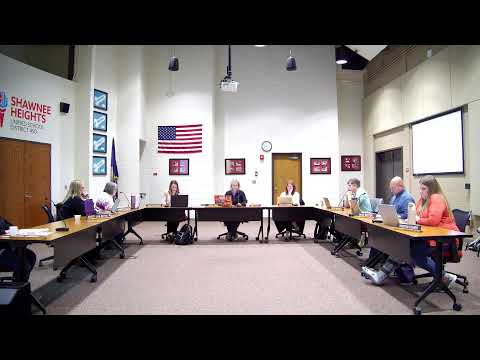
Board reviews KASB‑recommended policy updates; members ask for KASB rationale on bullying and opt‑out language
Summary
Superintendent presented KASB suggested edits to roughly ten district policies including executive‑session recording prohibitions, graduation credit language, controversial‑issues guidance and proposed changes to bullying definitions; some board members asked the superintendent to request KASB's written rationale for recommended deletions and to provide clarifications on operational impacts.
The superintendent reviewed a package of recommended policy updates from the Kansas Association of School Boards (KASB) covering about ten policy areas and attached forms.
Highlights included a recommended prohibition on recording in executive session; a clarification that graduation requirements are 24.5 credits and that new requirements would apply to subsequent ninth‑grade cohorts; guidance for teachers to remain neutral when covering controversial issues; removal of the word "AIDS" across health‑policy language in favor of broader terminology; and proposed edits to the district's bullying policy that, according to the presentation, would remove some enumerated categories because KASB considers the topic covered elsewhere in statute or policy.
Board members asked several clarifying questions. One member requested the verbatim rationale from KASB explaining why the bullying policy language was narrowed; another asked how the religion opt‑out language would work operationally and whether parents could identify specific topics in advance. The superintendent agreed to request KASB's written rationale and to circulate the responses to board members.
Board members also raised questions about practical classroom impacts — for example, how opt‑outs would affect spontaneous read‑aloud choices and how alternative assignments would be handled for state‑required courses such as biology — and staff described current practices for notifying families and providing alternate assignments where feasible.
What happens next: Superintendent will follow up with KASB for written rationale on specific recommended changes and will circulate that information to the board before further action.