ATCC says House Bill 12 empowered rapid seizures of unlicensed THC, posts dashboard showing $2.29M seized
Loading...
Summary
The Alcohol, Tobacco and Cannabis Commission told the Economic Matters Committee that enforcement tools created by House Bill 12 have allowed on‑site seizures and accelerated charges: about 1,200 inspections yielded roughly 111 charges and an estimated $2.29 million in seized unlicensed THC products in the initial months, the agency said.
The Alcohol, Tobacco and Cannabis Commission told the Economic Matters Committee that new enforcement authorities in House Bill 12 led to a rapid increase in inspections and seizures of unlicensed THC products.
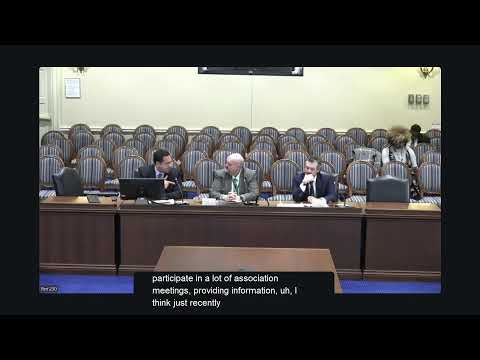
"Starting 07/01/2025 to today, we've seized over 2 and a quarter million dollars worth of this product," said Jeff Kelly, ATCC executive director, describing work since the law took effect. ATCC staff said their publicly posted cannabis enforcement dashboard reported an estimated $2.29 million in seized value as of the most recent update.
House Bill 12 (effective July 1, 2025) added labeling and advertising violations that do not require chemical analysis and authorized ATCC officers to seize noncompliant product on site, staff testified. "These have been the most effective charges because they don't require a chemical analysis," Tom Akers, the agency's legal director, said, describing how labeling or cartooned packaging can be cited immediately.
ATCC presented enforcement data covering 07/01/2025–12/31/2025: about 1,200 inspections focused on cannabis issues, approximately 111 charges filed and roughly 99 cases charged; the agency reported 17 docketed cases and 53 pending at the time of the slide. Staff said case totals have continued to rise since then.
Andrew Garrison, ATCC's director of finance, administration and accountability, described the agency's new weekly dashboard (attcc.maryland.gov) and said the tool breaks seizures down by product type and jurisdiction to help the public and local officials track enforcement activity. "We updated on Wednesdays. So it was 2 and a quarter million last week. It's just under 2.3 now," Garrison said during the briefing.
Presenters said enforcement focuses on illicit retail sellers that present products that mimic licensed dispensary packaging or advertise THC in ways inconsistent with Maryland Cannabis Administration labeling requirements. Kelly described three enforcement domains created by the Cannabis Reform Act: licensed business oversight (Maryland Cannabis Administration), local police handling street‑level criminal activity, and ATCC enforcement of the illicit retail market.
On litigation, Tom Akers told the committee that earlier injunctions had constrained ATCC enforcement for almost two years but that recent appellate and Maryland Supreme Court decisions put the state in a "strong position" to proceed. Akers said the Washington County case that began the challenge would be remanded for further proceedings following the Supreme Court's action.
ATCC staff emphasized outreach and coordination with local state's attorney offices, police departments and public‑health partners. The agency said it provided prosecutor training, met with state's attorneys across Maryland and included public‑facing education (brochures and PSAs) before and during enforcement actions.
The committee asked for additional jurisdictional breakdowns and ATCC said it can provide aggregated, anonymized county-level charge counts while respecting restrictions on publishing individual criminal charges.