
Consultant Emergent Global Solutions outlines study approach, stakeholder outreach and finance modeling for Washoe County fire study
Get AI-powered insights, summaries, and transcripts
Subscribe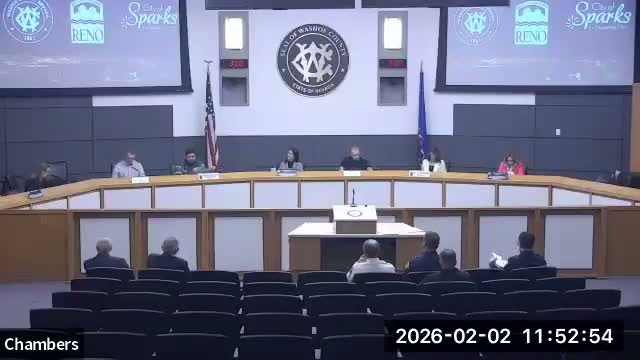
Summary
Emergent Global Solutions introduced its team and approach to the Regional Fire Services Study Board, promising to revalidate prior work, model multiple financial scenarios and host stakeholder engagement including town halls; consultants emphasized governance and revenue as determinative factors and warned the schedule is aggressive.
Emergent Global Solutions presented Item 5a2 to the Regional Fire Service Study Board on Feb. 2, 2026, introducing Mark Ghilarducci (president) and partner Rick Martinez and describing the firm’s planned approach to the regional fire and EMS feasibility, efficiency and service-enhancement study.
Ghilarducci said EGS will “take advantage of this of the studies that you’ve done” rather than duplicate prior work, revalidate past data, and build financial and operational scenarios tied to the RFP tasks. Rick Martinez, who cited experience with large consolidations in Sacramento, said his team sees two recurring determinants in successful regional work: governance (who controls policy) and revenue/funding. Martinez told the board he expects a “graduated approach” with multiple implementation pathways rather than a single predetermined outcome.
On deliverables, EGS committed to financial modeling that analyzes current funding streams, identifies one-time and ongoing revenue opportunities, and estimates phased implementation costs where data allow. Martinez cautioned that the degree of precision will depend on the completeness and timeliness of financial and operational data provided by the jurisdictions.
Consultants outlined stakeholder engagement milestones: internal meetings and POC outreach beginning immediately, a public feedback town hall planned for March (to be augmented by online portals and written comment), internal stakeholder workshops through the summer, and a draft public presentation in September followed by a final report by December 2026. Board staff (Cadence Matievich) and EGS agreed that Cadence will be a primary contact for consolidated communications while maintaining open-meetings compliance.
Board members repeatedly requested that public messaging be carefully scripted and that the consultant provide an "a la carte" menu of options and precise cost/benefit estimates for partial or full regionalization. Members asked EGS to model long-term employee cost projections — including pension and benefit liabilities — and to evaluate impacts on property insurance availability as required by SB 319. EGS said it would include insurance availability and affordability in the technical tasks to the extent possible.
No formal decisions or authorizations were taken on consolidation at the Feb. 2 meeting. The board closed the item with an expectation of monthly written updates from the consultant and scheduled public engagement milestones.