
Norwalk Board hears rising special-education needs, approves recruitment and training plans
Get AI-powered insights, summaries, and transcripts
Subscribe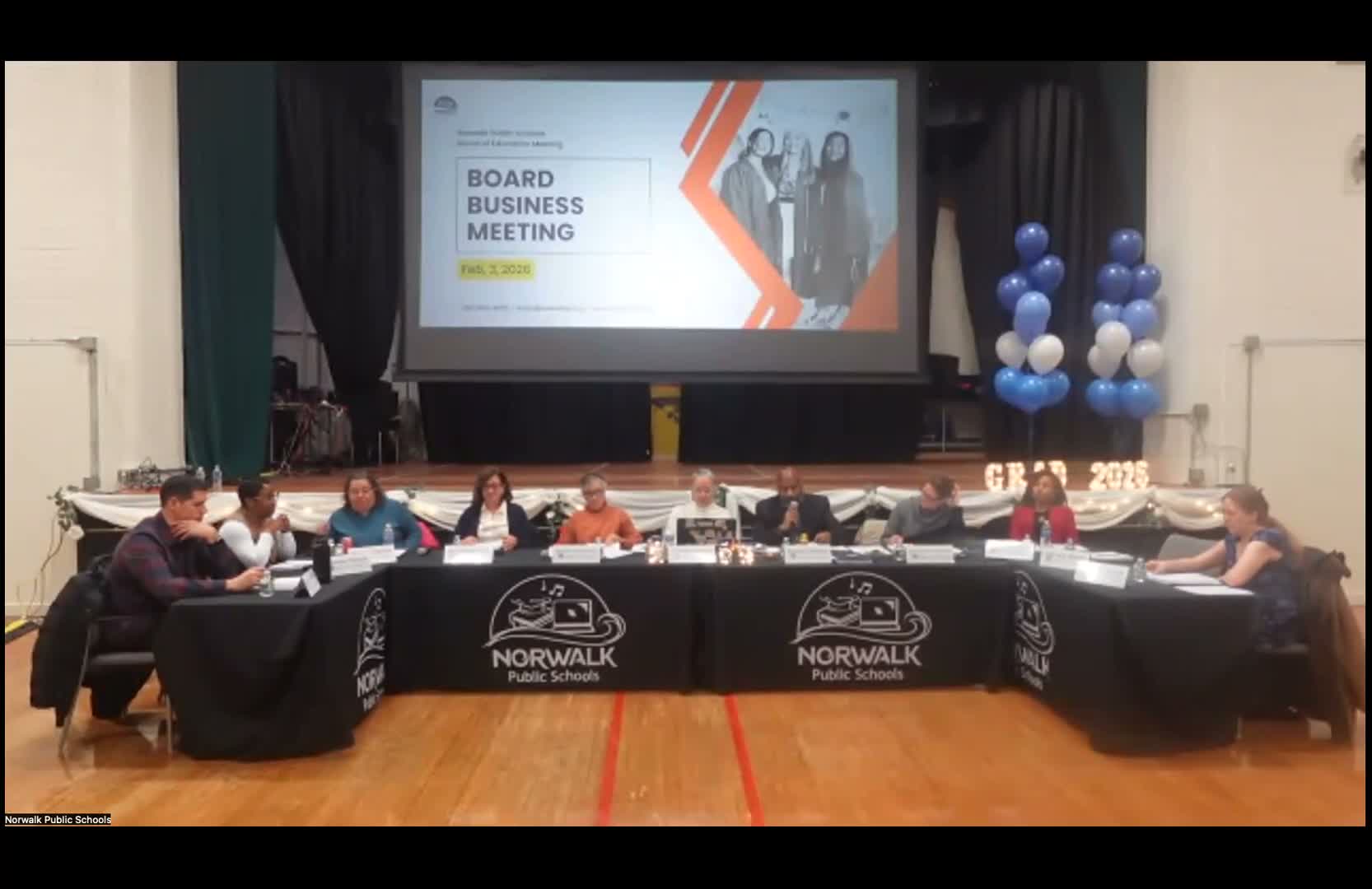
Summary
Superintendent and district special-education staff told the Norwalk Board of Education on Feb. 3 that special-education prevalence rose to about 18% and the district is expanding in-house programs, training and recruitment (including a district-funded cross-endorsement pathway and para-to-teacher options) to address staffing and caseload challenges.
At a Feb. 3 meeting, Norwalk Board of Education leaders laid out a multi-year response to rising special-education needs as the district seeks to keep services in-house while coping with unfunded state mandates.
Superintendent Dr. Estrella and special-education presenter Rob Pennington said the district’s prevalence rate for students with individualized education programs has increased from roughly 14% in 2020–21 to about 18% this year. "Our prevalence rate is at 18 percent," Pennington said, citing district records and comparisons with neighboring districts and the state average.
Why it matters: district officials said the growth in identified needs is driving higher staffing and service costs that state and federal funding have not matched. The administration provided a Shipman & Goodman document summarizing state mandates that require services without commensurate funding and noted an example where a change to the 18–22 program increased first-year local cost by about $900,000.
What the district will do: Pennington outlined a set of actions to reduce gaps and stabilize staffing. Those include annual caseload audits that allow midyear adjustments where a school reaches a ‘‘tipping point,’’ a monthly new-teacher academy for special-education staff, development of district-run certification paths (a summer-start, district-funded cross-endorsement program with a three-year service commitment), and a paraeducator residency with Central Connecticut State University for staff who hold bachelor’s degrees. "We are calling this a grow-your-own initiative," Pennington said of the cross-endorsement plan.
Program development: the district described a continuum of programs to keep services local — integrated co-teaching (ICT) classrooms, LEAP self-contained autism classrooms (now in multiple elementary schools), literacy academy classrooms for students with dyslexia, STARS communication programs, a recently added middle-school 'triumph' classroom, and 18–21 transition and Project SEARCH programs that include worksite placements. Board members heard that building such capacity is often less costly over time than outplacing students in private programs.
Board questions and follow-up: board members asked for more detail on caseload monitoring, Orton–Gillingham (OG) reading certification and plans to expand OG-trained teachers in every building, and why staff turnover remains high. Pennington said the district has increased special-education FTEs (from roughly 127 to 156.7 in recent years) and has 16 teachers signed up so far for the cross-endorsement program. He said attrition is driven partly by compensation competition with neighboring districts and the demanding nature of special-education work.
What’s next: administration said the information will inform upcoming budget discussions and that continued state advocacy is needed to fund statutory mandates. The superintendent shared the Shipman & Goodman summary with the board and said the district will continue to report on caseload audits and program implementation.
The meeting moved from the superintendent’s report to the consent agenda and other action items after the presentation.