Salem holds public meeting on hazard mitigation-plan update; consultants flag flooding, storms and seawall maintenance
Loading...
Summary
City consultants presented a draft update to Salem's hazard mitigation plan, described risk-ranking methods and modeling (FEMA Hazus), and invited public input particularly about flooding, seawall upkeep and power-outage resilience. A second public meeting and public review are scheduled before submission to MEMA and FEMA.
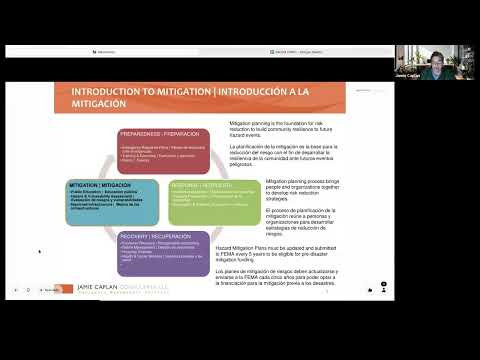
City of Salem officials and outside consultants on [date not specified] presented an update to the city's hazard mitigation plan and sought public input on priorities for reducing risk from natural hazards. "Hazard mitigation is any sustained action taken to reduce or eliminate the long-term risk to life and property from hazard events," consultant Jamie Kaplan said, noting the plan update is required about every five years and must be reviewed by the Massachusetts Emergency Management Agency (MEMA) and then FEMA before the city may adopt it.
The consulting team described the plan's structure and analytical approach. Ellen Grapp Loth, who leads the risk assessment work, said the team uses FEMA's Hazus software for modeling flood, wind and earthquake losses and that the draft ranking of 13 hazards weights probability and impact most heavily (30% each) with spatial extent, warning time and duration completing the score.
Flooding, both coastal storm surge and inland flooding, emerged as top concerns in the presentation and audience feedback. Grapp Loth showed FEMA 1% annual-chance floodplain mapping and noted that some critical facilities identified by the city fall outside the formal floodplain but have still experienced flood impacts. Public commenters and the consultants repeatedly raised seawall condition and maintenance as a local priority: one attendee urged "an active program that would be monitoring those seawalls, and also, having preventive maintenance done to them," a proposal the consulting team said has come up in internal HMPC discussions.
Meeting participants also discussed cascading effects such as power outages. Kaplan said mitigation planning will include checks on whether critical facilities have backup power and suggested both structural solutions (generators, burying power lines) and operational responses (opening heating or cooling centers, stronger communications) to reduce harms when outages occur.
The presentation set out draft mitigation goals including "saving lives" and "reducing losses to property," strengthening buildings and infrastructure, protecting natural systems and increasing community capacity through education and outreach. Kaplan described how mitigation actions will be prioritized into high, medium and low buckets using factors that include the hazard addressed, protection of critical facilities and vulnerable populations, and a simple benefit-cost scoring (noting FEMA requires benefit-cost analysis for some projects).
Consultants outlined the project timeline: the HMPC has met several times, the team expects a second public meeting in April focused on mitigation actions, and plans to send the draft to MEMA in May and on to FEMA for federal review before returning to the city for adoption. Kaplan said the plan is a living document that can be revised between formal five-year updates and that inclusion in an adopted, FEMA-approved plan enables Salem to apply for pre-disaster mitigation grants though it does not guarantee funding.
Next steps include a second public meeting and posting the draft plan for public review; attendees were invited to provide further input via Mentimeter during the session or by contacting project staff. The consulting team acknowledged requests to correct mapping details (for example wildfire legend colors and local site classifications) and said they would follow up and update the materials as appropriate.