Get Full Government Meeting Transcripts, Videos, & Alerts Forever!
Get email alerts on the OCSCS Charter topic
No spam. Unsubscribe anytime.
Public hearing on OC School of Computer Science charter revision draws divided audience over oversight and finances
Summary
Parents, unions and district officials filled the Nov. 19 hearing on the charter petition revision to move the Orange County School of Computer Science (OCSCS) to an autonomous charter board and staff raised questions about budgets, bargaining and athletics. OCSES leadership said autonomy would increase grant eligibility and preserve legal accountability.
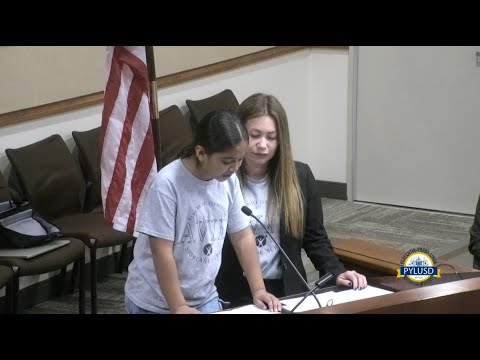
The Placentia‑Yorba Linda Unified School District held a public hearing Nov. 19 on a charter petition revision that would reorganize the Orange County School of Computer Science (OCSCS, sometimes called OCSES in the petition) under a local charter board and move to a locally managed pass‑through budget. The hearing drew dozens of public commenters and a lengthy presentation by OCSES leadership.
OCSES presenters said the proposed revisions would create a charter board composed of parents, business and industry representatives and would allow OCSES to accept certain grants and manage a dedicated budget to target investments in innovation. OCSES said its funding remains ADA‑based, that charter schools must comply with AB 1505 and annual independent audits, and that MOUs with the district could preserve health insurance, retirement (PERS/STRS) and other benefits for staff.
Opponents—parents, teachers and union representatives—warned that shifting governance to an autonomous charter board would reduce district oversight, expose classified staff to loss of district bargaining protections and risk siphoning students and ADA away from the general fund. Porter James Hughes, speaking for the California School Employees Association, told trustees the conversion would “strip students and classified staff of fundamental rights and protections they currently enjoy under district oversight.”
Trustees pressed OCSES leadership on specifics. The presentation and Q&A covered: staffing counts (OCSES reported approximately 44 certificated teachers and roughly 80 total staff), supervision roles (the presenter described supervisors, a security manager and noon‑duty supervisors), how athletic participation and WASC accreditation would be handled via MOUs, and the mechanics of an oversight fee (the presenter described a typical 3% maximum oversight fee on ADA used by some districts). OCSES leaders said teachers would remain credentialed and that bargaining units may choose whether to represent charter staff; MOUs would be used to protect benefits.
OCSES said some programs (for example, USI, the Sports Institute housed on the OCSCS campus) are logically folded under the charter’s governance because they are on the same site, and that autonomous status can make the school eligible for start‑up grants (the presenter estimated possible first‑year grant opportunities of several hundred thousand dollars to roughly $1 million). OCSES also said it would not “steal” funds from other sites and proposed phased MOUs to preserve athletic eligibility and other student supports.
Trustees requested follow‑up materials including the OCSES presentation slides, a proposed MOU template addressing benefits and athletics, and more detailed staffing and budget projections. Several trustees asked legal counsel to review the proposed governance and budget mechanics and asked staff to return to the board with a study session before any final decision.
Next steps: The hearing provided extensive public record and questions for staff to answer; the board did not vote on the charter petition during the Nov. 19 meeting and signaled it expects additional information and study sessions before any action.