
Lawmakers weigh limited pilot to let treasurer invest seized gambling proceeds in Bitcoin
Get AI-powered insights, summaries, and transcripts
Subscribe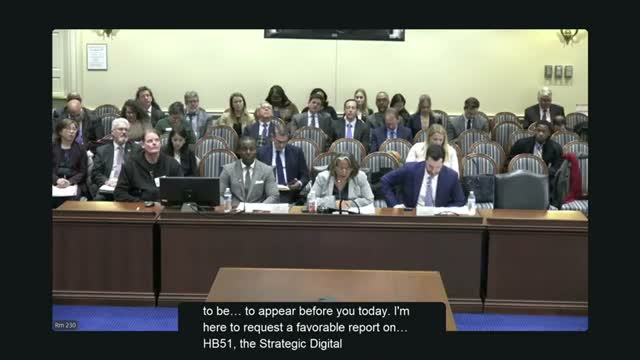
Summary
HB 51 would authorize the state treasurer to invest up to 5% of annual seized gambling‑violation proceeds in high‑market‑cap digital assets (current draft limits eligible assets to Bitcoin) to test whether modest exposure boosts long‑term returns; proponents cited diversification and hedging, opponents raised risks and questioned taxpayer exposure.
Delegates and witnesses debated House Bill 51, the Strategic Digital Asset Reserve Act, which would create an enabling fund to allow the state treasurer to invest up to 5% of certain seized gambling violation proceeds (sponsor estimated $5,000,000 collected annually; the 5% cap equals roughly $250,000) into high‑market‑cap digital assets under guardrails in the bill as amended.
Sponsor testimony described the approach as a cautious experiment: create an empty enabling fund, consult the treasurer on readiness, and cap annual investments. Proponents including Dennis Porter of Satoshi Action and Douglas Dennard of DCD Consulting argued modest allocations to Bitcoin can act as a long‑term hedge against dollar debasement and cited institutional adoption and comparative long‑term returns.
Opposition testimony (Jonathan Harris, CFA) warned the purchase of Bitcoin could functionally act as a speculative subsidy that benefits early adopters and recruits new buyers, calling the approach risky for taxpayer‑controlled funds. Committee members pressed technical issues: whether funds are fiat seized proceeds (panel confirmed), whether seized crypto is eligible (panel said no), why the bill limits eligible assets by market capitalization (to include only assets like Bitcoin), and whether the treasurer and comptroller had been consulted (sponsor said amendments reflect treasurer requests and an enabling approach).
Committee members requested clarification from OFR and the treasurer's office before moving forward; no formal action was taken at the hearing.