Get Full Government Meeting Transcripts, Videos, & Alerts Forever!
Get email alerts on the Firearms Policy topic
No spam. Unsubscribe anytime.
Bill would extend handgun permit renewal period for retired officers to five years
Summary
House Bill 94 would lengthen handgun permit expiration and renewal periods for qualified retired law‑enforcement officers to five years, aligning Maryland with neighboring states; supporters said it reduces administrative burden while questions remain about a one‑time general fund cost estimate.
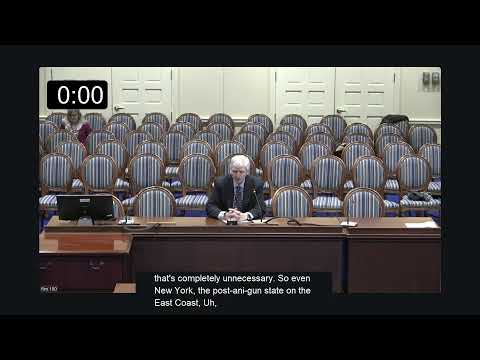
Delegate William Valentine presented House Bill 94 to extend handgun permit renewal periods for qualified retired law‑enforcement officers, proposing a five‑year term for initial expiration and renewals. "This bill is strictly an administrative bill," he said, framing the change as bringing Maryland into line with neighboring states that use five‑year permits.
Retired state troopers and law‑enforcement associations testified in support. Michael Ault, a retired trooper, said the proposal would cut administrative processing and noted that retired officers apply and renew at no cost. Manny Geraldo, representing the Maryland Troopers Association, asked for a favorable report, describing the change as straightforward. Mark Penak (title/organization garbled in the transcript) urged broader modernization, saying automated fingerprint/Rapback systems and electronic records make frequent renewals unnecessary and listing several states with five‑year terms.
Committee members questioned a $170,000 one‑time general fund expenditure noted in the fiscal material and whether that cost could be amortized across new multi‑year renewals. Supporters said they would work to reduce or spread that cost. The committee closed testimony on the bill; no final vote occurred at the hearing.