
South Fulton Zoning Board of Appeals reverses staff zoning interpretation, approves plat with interconnectivity and mixed‑use conditions
Get AI-powered insights, summaries, and transcripts
Sign Up Free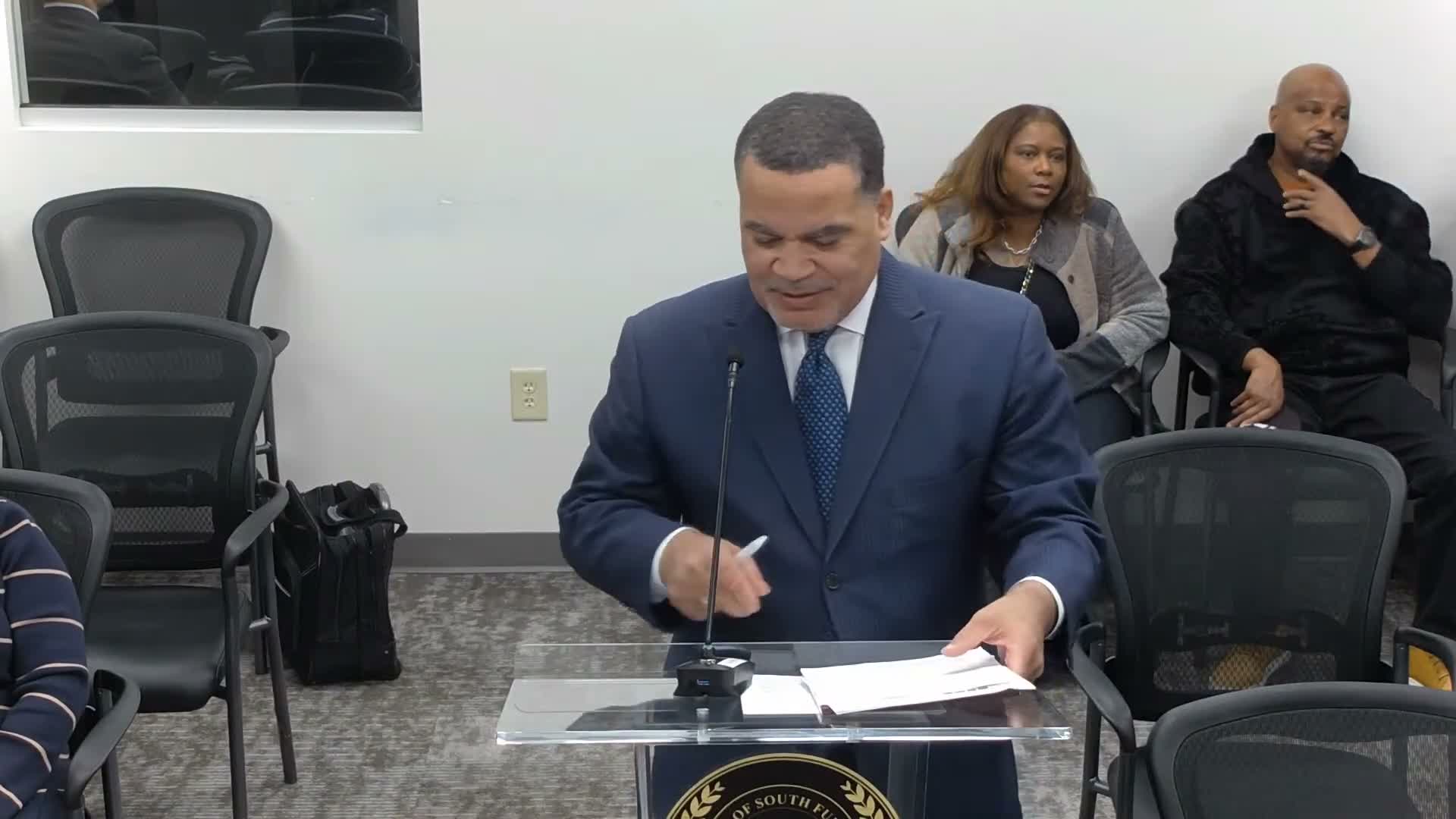
Summary
After presentations from the applicant and city staff and two brief executive sessions, the South Fulton Zoning Board of Appeals reversed the city’s zoning determination on Feb. 3, 2026 and approved the developer’s plat for Pod F with conditions requiring interconnectivity and a mixed‑use component.
The South Fulton Zoning Board of Appeals on Feb. 3, 2026 reversed a staff zoning interpretation and approved a plat for development in Pod F of the Sandtown Center project, imposing conditions that require interconnectivity across Pod F and inclusion of a mixed‑use component shown on the original plan.
Attorney Hakeem Hilliard, representing the applicant and developer, told the board the city bears the burden of proving any revocation of previously granted zoning rights. "The city bears the burden of proof," Hilliard said, arguing the 2004 modification was a technical adjustment that preserved the original program and that "absent express revocation, the entitlements remain." Hilliard also said prior staff correspondence from Director Reginald McClendon confirming a remaining right to develop 200 multifamily units for the northwest quadrant supports the developer’s position, subject to site‑plan compliance.
A city planning representative urged caution, telling the board that staff member Karen Tominey’s 09/03/2025 recommendation change followed review of the case file and that the proposed site plan "does not match" the 2001 zoning. The city noted the 2001 and 2004 documents include conditions beyond unit counts, citing conditions that prohibit direct lot access to Boat Rock Road and Reynolds Road. The city argued those conditions and the overall town‑center expectations meant the application was not ready to proceed as submitted: "She wasn't wrong. In fact, she was correct," a city attorney said of the staff recommendation.
Board members questioned both sides about unit accounting and plan details. The parties agreed the original 2001 approval established a 550‑unit total for the overall mixed‑use development (350 already built and 200 remaining on the northwest quadrant, per staff correspondence), but they disputed whether the 2004 modification altered allowable uses or merely adjusted the schematic plan. Developer representatives and the landowner described repeated outreach to city staff and community groups during the project’s multi‑year entitlement process.
After two brief executive sessions to confer with counsel, the board moved and voted to set aside an earlier motion and then to reverse the staff zoning determination with specific conditions. The motion, adopted by the board, requires (A) connectivity to existing access roads in adjoining pods and interconnectivity within Pod F and remaining portions of Pod F, and (B) inclusion of a mixed‑use component as depicted in the original plan for District F.
Developer representative Ray Crocker accepted the interconnectivity requirement as achievable, while landowner Doug Crawford reiterated that interior commercial uses have historically been difficult to attract and said the development team will continue to pursue retail on a separate parcel fronting Camp Creek Parkway.
The board’s action reverses the city’s prior interpretation and approves the plat subject to the stated conditions. The meeting adjourned after the vote; the board did not take public comment during the restricted public session and limited discussion to parties’ legal counsel and representatives.
What happens next: the board’s order will be reflected in its written decision and the conditions will be documented; any further amendments to plans or requirements for third‑party easements to achieve interconnectivity will be matters for future permitting or private negotiation.