Get Full Government Meeting Transcripts, Videos, & Alerts Forever!
Get email alerts on the Ordinance 6 26 Parking Code topic
No spam. Unsubscribe anytime.
Planning and Zoning Commission recommends moving abandoned-vehicle parking rules into City Code
Summary
The Planning and Zoning Commission recommended approval of Ordinance 6-26 to transfer an abandoned-vehicle and watercraft parking rule from the Land Development Code to the City Code. Commissioners voted to recommend the change after staff described it as a housekeeping correction; questions focused on fines and liens under expedited enforcement.
The City of Cape Coral Planning and Zoning Commission on Feb. 4 voted to recommend approval of Ordinance 6-26, a housekeeping measure that moves an abandoned-vehicle and watercraft parking regulation from the Land Development Code into the City Code.
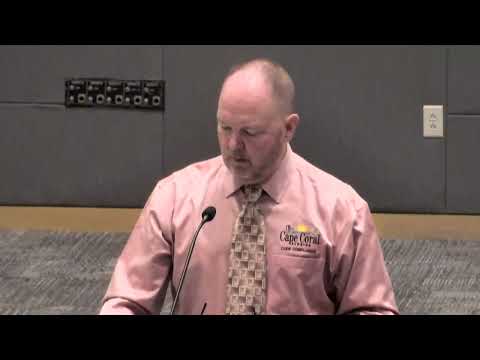
Todd Hoagland, code compliance manager for the City of Cape Coral, told commissioners the ordinance corrects an item that was missed when other parking provisions were moved into the code under a prior ordinance. “The purpose of 6-26 … would be moving the abandoned vehicle or watercraft from land development code 5.10.18 over to our city code of ordinances under 12-1 27.19,” Hoagland said.
John De Clarios of the city attorney’s office said the commission was being asked to act only on the abandoned-vehicle section that had been inadvertently omitted after earlier transfers. “The only reason that we’re before you today is because of what Mr. Hoagland presented,” De Clarios said.
No members of the public spoke during the public hearing.
During discussion, Commissioner Sowerton asked how enforcement works and whether unpaid fines become liens on property. Staff described the city’s expedited enforcement process: a cited property owner is given 10 days to either pay the citation or file an appeal, rather than the longer standard code-enforcement timeline. Hoagland and the attorney explained that unpaid fines can lead to a recorded lien on the property that “is good for 20 years” and that fines may accrue interest; staff also said there are city processes to request mitigation or reduction once a property is brought into compliance but those options are not available while a violation remains unresolved.
A commissioner moved to recommend approval of Ordinance 6-26 and the motion was seconded by the commissioner identified in the record as 'Senator.' The city clerk called the roll. Abking, Butana, Estes, Martin, Moore, Senator and Severson each voted “Aye.” The chair announced, “All ayes, motion carried,” and the commission recommended the ordinance to city council.
The commission closed citizens input, received no staff updates or unfinished business, and adjourned. The next regular meeting is scheduled for Wednesday, March 4 at 9 a.m. in Council Chambers.