
Maryland committee hears HB 1 to cap executive pay recoverable in utility rates
Get AI-powered insights, summaries, and transcripts
Sign Up Free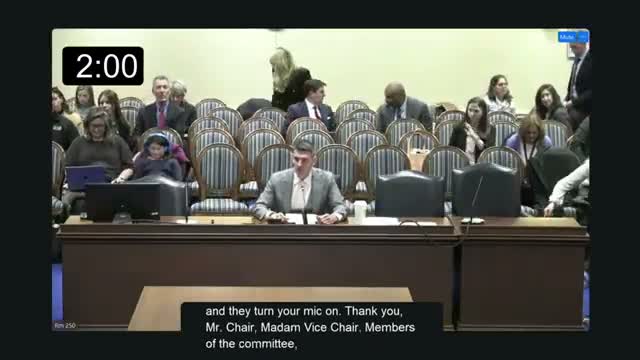
Summary
Supporters told the Environment and Transportation Committee HB 1 would prevent ratepayers from subsidizing excessive executive bonuses; utilities warned it could hamper recruitment and shift costs into fixed rates. The PSC said it already reviews compensation in rate cases but the bill would create a clearer statutory cap.
The Environment and Transportation Committee heard testimony on House Bill 1, a bill sponsored by Delegate Brian Crosby that would bar investor‑owned utilities from charging customers for executive bonuses and would cap supervisor compensation recoverable in rates at 110% of a Public Service Commission (PSC) commissioner’s salary. "HB 1 prohibits investor owned energy companies from using customer rates to pay for executive bonuses or compensate executives over a 110% of the PSC commissioner salary," Delegate Brian Crosby said in his presentation.
Supporters framed the bill as a consumer‑protection measure aimed at easing pressure on households facing high energy costs. David Lapp of the Office of People's Counsel said the bill "codifies existing commission precedent" and would give clearer statutory authority to the PSC to limit recovery of incentive pay not tied to customer‑facing performance. Jennifer Bevin Dangle of Economic Action Maryland Fund described constituent cases in which seniors must choose between medicine and utility bills and urged the committee not to dismiss modest per‑customer savings: "$60 a year is a week of essential groceries for one of our clients." Emily Scar of Maryland PIRG recommended tightening language so utilities cannot circumvent limits through stock options or deferred compensation.
Opponents — including utilities representatives from Exelon, BGE and Pepco/Delmarva — said the bill as written risks unintended consequences. Britney Jones, director of government affairs at BGE, said HB 1 would affect large groups of nonunion employees and could impair the companies’ ability to recruit specialized engineers and operations staff: "This bill targets... supervisors to cap his well earned pay that is aligned with the market." She and other utility witnesses warned that moving incentive pay into fixed salary could increase the portion of costs recovered through rates and could, in some circumstances, affect credit and cost‑of‑capital, which in turn can raise borrowing costs.
Committee members pressed witnesses on measurable impacts. Crosby and several advocates said expected per‑customer savings would be modest and vary by service territory; Crosby suggested a likely reduction "maybe less than $5 on a bill," while utility testimony noted a best‑case estimate of roughly $1.70 per customer in some scenarios and cautioned the fiscal note could not confirm precise savings. The PSC's Ben Baker explained how bonuses and compensation are reviewed in rate cases and said HB 1 would create a statutory "bright line" restricting which bonuses and supervisor pay are recoverable: "All utility costs are subject to review... but this bill would say this is what is truly allowed and what is not allowed."
The hearing included extended exchanges about scope (who counts as an "executive" or "supervisor" under the bill), union versus nonunion recovery (union bonuses would remain recoverable under the bill’s current drafting), possible drafting fixes (explicitly listing stock options, deferred compensation and other incentive forms), and the relationship between legislative policy and PSC enforcement. Witnesses on both sides offered to provide additional data (for example, company compensation ranges and pension‑fund exposure) if requested.
No formal vote was taken at the hearing. Committee members indicated interest in refining bill language and in follow‑up information (comparative state laws, pension holdings, and quantified savings tied to specific rate cases). The committee concluded the HB 1 hearing and noted subcommittee meetings and additional briefings may follow.