Get Full Government Meeting Transcripts, Videos, & Alerts Forever!
Get email alerts on the Charter Governance topic
No spam. Unsubscribe anytime.
PYLUSD board denies OCSCS material revision, citing governance, fiscal and insurance risks
Summary
After nearly four hours of public comment and legal presentations, the Placentia-Yorba Linda Unified School District Board of Education voted to deny a material revision to the Orange County School of Computer Science charter petition, citing concerns about a proposed 501(c)(3) governance change, district liability and fiscal impacts.
The Placentia-Yorba Linda Unified School District Board of Education voted Jan. 14 to deny a material revision to the Orange County School of Computer Science (OCSCS) charter petition after lengthy public comment and a legal presentation outlining possible legal and fiscal consequences.
The petition sought changes to the school’s governance and funding structure that, according to board counsel, would effectively make the dependent charter into an independent charter governed by a separate 501(c)(3) and a charter board selected by the founder. Board counsel Suki Oluwalia told trustees: "It is absolutely an independent charter school if you allow that governance structure," and described several downstream consequences including potential denial of district insurance coverage for claims, exposure of the district to liability while losing day-to-day control, and complications under state law for transferring equipment or programs such as the Universal Sports Institute (USI).
Board members said those legal and fiscal concerns weighed heavily. Trustees and staff pointed to a one-page budget example discussed during the meeting showing the district had been charging roughly $10 per square foot for space (about $1 million under the current arrangement) and that the proposed model would reduce that to approximately 2% of the charter’s budget (about $200,000), a shift trustees said could harm district finances and create parity issues for other countywide charters.
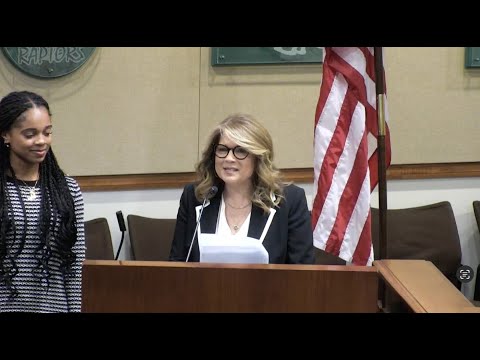
Principal Beth Fisher, who presented for OCSCS, disputed what she called misinformation about the petition and underscored the school’s start-up costs and fundraising needs: "The total start up cost for OCSES was $1,380,000," she said, and argued that the requested changes were meant to unlock grant opportunities and allow the school to grow while remaining a dependent charter. Hundreds of parents, students, staff and community members spoke during the public-comment period, many urging approval so the school could access grants and sustain programs such as its innovation lab; others warned of rushed decisions, matters of transparency and the potential transfer of district assets.
Following discussion and trustee questions, the board moved to deny the material revision (the motion carried as reported during the meeting). Counsel advised that the district must adopt written factual findings to support a denial; trustees later adopted the required written findings by resolution to finalize the action.
What the decision means: Because the board denied the material revision, OCSCS will continue to operate under the terms of the charter petition approved in December 2023 unless the petitioners return with a revised proposal. Counsel and several trustees encouraged the school and district to pursue alternative options—such as a separate fundraising foundation or a donor-directed 501(c)(3) that would hold grant funds for the school—rather than the governance change that would create independent-charter status and the accompanying liabilities.
Next steps: The board recorded that counsel will prepare the formal written findings for the denial for public record, and several trustees requested a follow-up study session where staff, petitioners and counsel can explore narrower options for the school to obtain grant funding while preserving the district’s protections.