
Supporters urge schools to carry airway‑clearance devices after choking deaths; bill would require one per school
Summary
HB 117 would require each Maryland school to have at least one airway‑clearance device and authorized staff; disability advocates and manufacturers said devices are a low‑cost, noninvasive backup when the Heimlich fails, while delegates asked about training, device lifespan and legal protections.
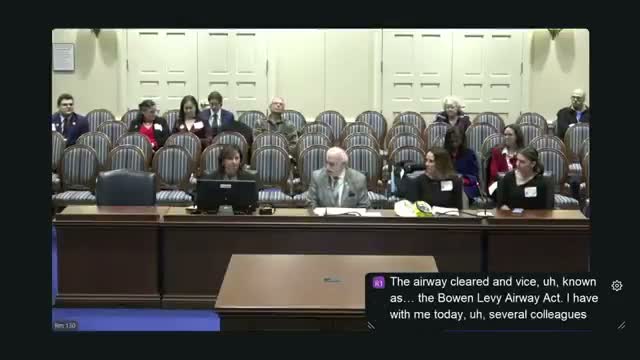
Delegate Rick Metzger presented House Bill 117, the Bowen Levy Airway Clearance Device Act, proposing that each school maintain at least one airway‑clearance device and designate trained staff (for example the school nurse) authorized to use it.
Advocates including Equal First Aid and disability organizations described higher choking risk for students with medical or mobility impairments and urged the devices as an inclusive safety measure. Manufacturer representatives with clinical studies and usage reports described LifeVac/LifeHack devices as noninvasive suction tools intended for use when standard protocols fail or are not feasible; one representative said the device costs roughly $70 and that masks in the kits carry a 2–3 year replacement interval. Injured parties and caregivers testified with personal accounts of rescues attributed to the device and described scenarios where the Heimlich could not be performed (for example, wheelchair users or unconscious victims).
Delegates asked about training, storage and certification. Manufacturers said a short training video (about five minutes) and in‑kit practice masks are available and that many CPR instructors have integrated the devices into training as a fallback option. Committee members also asked about Good Samaritan protections and premise liability; witnesses provided materials and said liability concerns are typical but manageable and that the devices are already used in many U.S. schools.
Witnesses emphasized the device is not meant to replace the Heimlich but to provide another option when traditional techniques are ineffective or cannot be applied. The committee closed the hearing with appreciation for student and family testimony and requested further follow up as the bill is considered.
Create a free account
Unlock AI insights & topic search