Get Full Government Meeting Transcripts, Videos, & Alerts Forever!
Get email alerts on the Dui Therapeutic Court topic
No spam. Unsubscribe anytime.
Spokane District Court judge outlines DUI therapeutic court and how to seek referral
Summary
Judge Smith described Spokane District Court’s DUI therapeutic court as a treatment-focused alternative to traditional prosecution, detailing five program phases, typical completion in 14–24 months, grant-funded testing and supports, and referral steps (phone: (509) 477-2230).
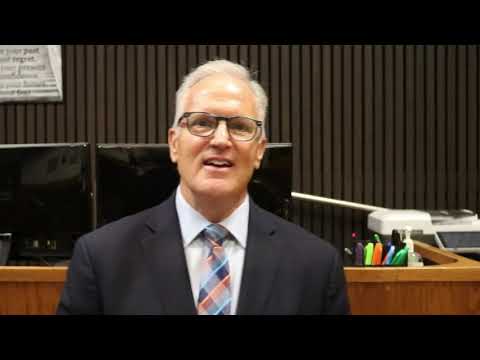
Judge Smith, who presides over therapeutic courts at Spokane District Court, provided an overview of the court’s DUI therapeutic court and explained how defendants or their attorneys can begin the referral process. He said the program emphasizes treatment for substance use and mental health conditions rather than focusing only on the criminal offense.
The judge said the court uses a team-based model that connects participants with testing and treatment, and helps with housing, employment, health care and transportation. “We focus on the root of the issues versus only the crime committed and work closely with you to address those issues through mental health and substance use disorder treatment, testing, all with a team of highly trained people committed to your success,” Judge Smith said.
He told listeners the program currently has grant funding that covers the cost of testing and monitoring, and in some cases covers treatment and limited financial assistance for basic needs on a case-by-case basis. Accepted participants receive a program manual outlining requirements and expectations.
Judge Smith described the program’s structure: participants progress through five phases and must complete projects to advance. “Most participants can finish the program within 24 months, although you can finish as quickly as 14 months if you stay compliant with probation and treatment,” he said. He added that some participants take longer and that the court accommodates that variation.
On outcomes, Judge Smith said the court has had “hundreds of participants successfully complete this program and go on to lead happy and productive lives.” He quoted a recent graduate describing the experience: “During Phases 1 and 2, I learned about the dedication of the DUI Court team and that I could trust them. Though there were several stumbles, it was during this period that I hit my stride, no longer relying on alcohol to hide from my stress.”
For defendants or their lawyers who want to pursue the program, Judge Smith said to contact the DUI therapeutic court office at (509) 477-2230 to start the referral process. He said court staff will guide callers through the eligibility and acceptance steps and, if accepted, set participants on a course for long-term recovery.
The informational session closed with Judge Smith thanking listeners and noting he hoped to meet prospective participants during the referral process.