
Everett Public Schools releases culturally responsive customer‑service manual and plans districtwide training
Get AI-powered insights, summaries, and transcripts
Subscribe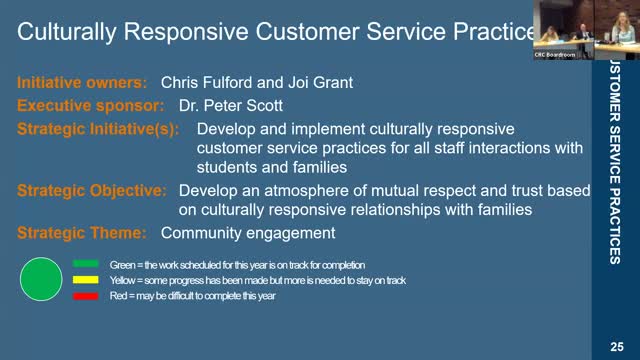
Summary
District leaders presented a new culturally responsive customer‑service manual developed with family input, described an October implementation day, adoption of an Ayla translation device, and plans to use the materials for onboarding and periodic progress monitoring across schools and departments.
Joy Grant and Chris (name variants recorded in the presentation) presented the district’s culturally responsive customer‑service initiative to the board on Feb. 3, describing a manual and training rollout intended to improve interactions with families and reduce barriers tied to language and culture.
"This work is not just about customer service. This work is not just about customer service. It's about belonging, representation, and connection," Joy Grant said, explaining that the manual was developed with surveys, focus groups and input from the Family and Community Engagement Council. Presenters said surveys were offered in multiple languages and families participated in focus groups and natural‑leader programs to shape the materials.
Phase 1 produced the manual; phase 2 centers on professional learning and embedding the guidance across district offices and school sites. Presenters said an October 'LID Day' introduced the manual and generated feedback used to revise the product. The district will make a living, digital copy available in all schools and distribute printed copies selectively for front‑office staff and other roles.
Practical examples cited in the presentation included front offices adding culturally relevant items (a school added Filipino prizes to a prize box) and adoption of an Ayla translation device to facilitate multilingual communication. Presenters noted the district works with families who speak an estimated 143 languages and said the translation technology, plus natural‑leader outreach, has helped families communicate more effectively with staff.
The district plans to use the manual and training materials for onboarding (new teacher orientation, paraeducators, office professionals), to embed expectations at the start of each school year and to schedule regular follow‑up through district councils. Presenters said they will gather ongoing feedback from staff and families and make adjustments as needed.
Board members suggested additional applications such as multilingual signage and other accessibility measures. Presenters described next steps as systematizing ongoing support, monitoring implementation across job classifications (including bus drivers and paraeducators), and continuing iterative refinement based on staff and family feedback. The meeting then adjourned to a closed session on bargaining; no formal board vote was taken on the initiative at this meeting.