
Everett Public Schools outlines expansion of early learning to boost third‑grade outcomes
Get AI-powered insights, summaries, and transcripts
Subscribe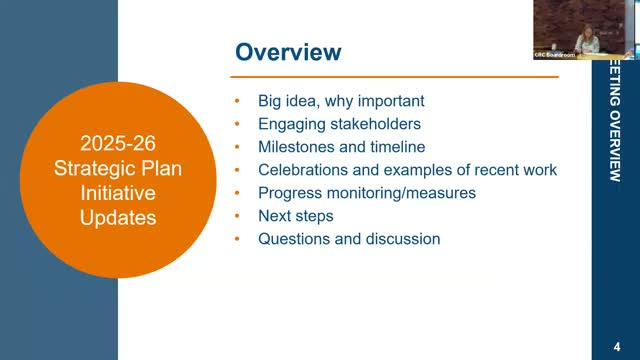
Summary
Anne Arnold presented data linking kindergarten developmental benchmarks to higher third‑grade SBA scores and outlined the district’s phase‑2 P‑3 strategy, including LETRS/letters training, expanded Everett Ready programming (1,000+ students), math and learning labs, and leadership cohorts for implementation.
Anne Arnold, director of early learning for Everett Public Schools, told the board on Feb. 3 that the district is moving into phase 2 of its P‑3 strategic initiative to sustain gains from expanded early learning and raise third‑grade outcomes.
Arnold cited WA Kids longitudinal data showing that kindergartners who meet developmental benchmarks across six domains later meet the state standards on the third‑grade SBA at much higher rates — 85.1 percent on English language arts and 84.2 percent in math — while children meeting none of those benchmarks met standards at far lower rates (about 20 percent ELA, 16.7 percent math). "We know that brain growth and development during pre‑natal through third grade is higher than at any other point," she said, arguing that district investments in the early years are essential to sustaining learning.
The presentation described phase‑1 accomplishments and the district’s current priorities. The district has expanded ECAP preschool offerings from half‑day to school‑day models, developed a play‑and‑learn drop‑in program that has expanded in frequency, and increased partnerships with licensed in‑home childcare and community preschools. Arnold said Everett Ready served more than 1,000 students entering kindergarten last year and the district launched transition‑to‑kindergarten classrooms in January to support children who had not previously had early‑learning access.
Instructional strategies for K–2 include deepening the district’s science‑of‑reading work with LETRS/letters training (four units with asynchronous work plus in‑person overviews) and expanding job‑embedded professional learning such as lesson study and learning labs. Arnold said 86 teachers are currently involved in letters training and the district plans to fund three additional cohorts this spring. In math, the district converted implementation‑leader funds to pay for substitutes so teachers and principals can observe and collaborate in classroom learning labs, a strategy Arnold described as a "high leverage" intervention to improve instruction.
Leadership development is part of the rollout: Arnold said 12 school and district leaders are enrolled in a P‑3 certificate program (a 10‑month cohort ending in April) and the district plans to request additional PASTA grant funding to support a second cohort in 2026. Progress monitoring will use WA Kids, the required early‑literacy screener for grades K–2 tied to the state dyslexia law, and annual SBA results in third grade to track long‑term outcomes.
Board members asked how the district engages families who preschool at home and how WA Kids data are collected and shared. Arnold described WA Kids as an observational tool completed in the first nine weeks of school with parent reports and color‑coded continuum reports provided before November conferences; she noted a statewide gap in sharing preschool WA Kids data into kindergarten but said local family connection meetings and orientation events help bridge that gap. Materials for families — including a kindergarten readiness guide developed with I‑5 corridor districts and funded in part by the Gates Foundation — are available in multiple languages.
Arnold said the district has implemented Quaver music in all 18 elementary schools and OpenSciEd curriculum units, and is working to align curriculum, assessments and adult learning so early gains are sustained through third grade. "We have managed to find the programs we needed and fill the gaps that we had and serve more and more of our kids," she said.
Next steps in the initiative include enrolling additional teacher cohorts for letters training, expanding math learning labs beyond Title schools, continuing leadership certificate cohorts, and maintaining progress monitoring. The board then moved to the second strategic‑initiative presentation; no formal vote or motion was taken during this workshop.