
Police warn e-bike conversions and fast electric motorcycles are outpacing enforcement; city discusses education, school bans and targeted downtown patrols
Get AI-powered insights, summaries, and transcripts
Sign Up Free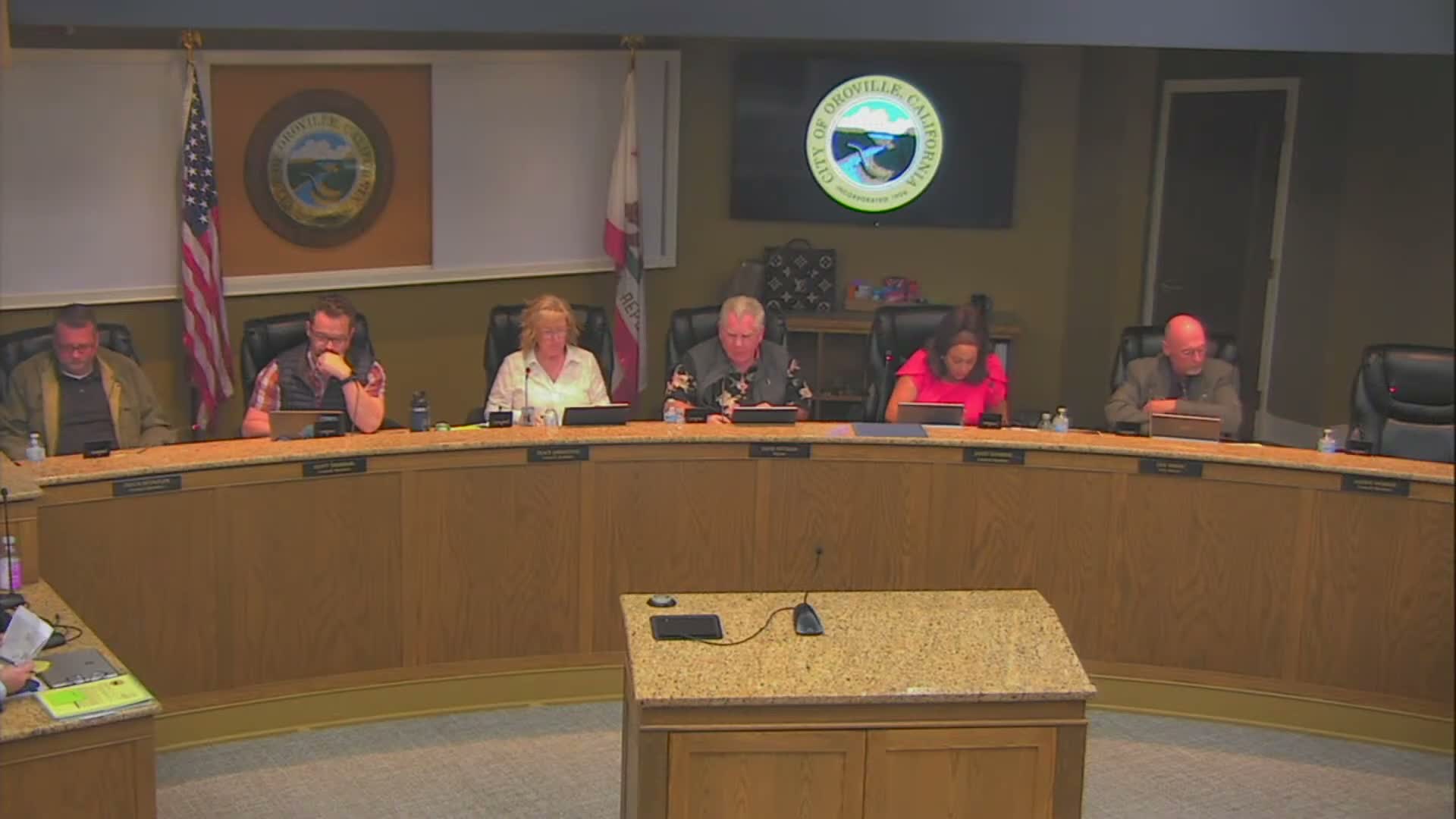
Summary
Oroville police briefed the council on e-bike categories, rising injuries and enforcement limits caused by modified Class 2 e-bikes and noncompliant electric motorcycles; the chief urged education, school collaboration and a targeted downtown patrol while noting state law limits some local regulatory options.
The Oroville Police Department told the City Council that evolving electric-bicycle technology and modified kits are creating enforcement and safety challenges as more high-powered, throttle-only electric motorcycles ("e-motos") and modified Class 2 e-bikes appear on local streets.
Police Chief Wines reviewed California's technical classifications: class 1 and class 3 e-bikes are pedal-assisted only (class 3 allows higher assisted speed and has an age limit); class 2 e-bikes have a throttle and are easier to operate without pedaling. The chief warned that some class 2 bikes are modified beyond the legal 750-watt limit and become effectively electric motorcycles that require registration and an M1/M2 motorcycle license.
"If you buy them an eMoto, it is illegal unless they have a motorcycle license, and it must be registered," Wines said, explaining that conversion kits and unregulated sales make visual identification and enforcement difficult. He added that local enforcement is complicated by court outcomes when juveniles are involved and by state laws that limit some local regulatory options (assembly bills passed in 2022/2023 were cited as constraining local registration requirements).
Chief Wines said the department plans a mix of public education, school-district coordination (examples in other jurisdictions include school-level bans of certain class 2 bikes), and a planned downtown patrol rotation to increase proactive enforcement without waiting for specific calls for service. He also referenced national medical reports of increased traumatic brain injuries tied to e-bike incidents in recent years.
Council members emphasized education and enforcement together. Several suggested school-district bans and a public campaign using the city's new marketing assets; others said temporary impoundment could be a deterrent but noted potential Fourth Amendment and state-law constraints.
Next steps: police will pursue school outreach, coordinate with CHP and county prosecutors on enforcement approach, evaluate pilot downtown patrols (aiming for increased presence before summer), and explore community education campaigns.
Provenance: Topic first introduced SEG 2527 and discussion continued through SEG 2744.