
Rural physician tells committee prior authorizations delay care and impose steep administrative costs
Get AI-powered insights, summaries, and transcripts
Subscribe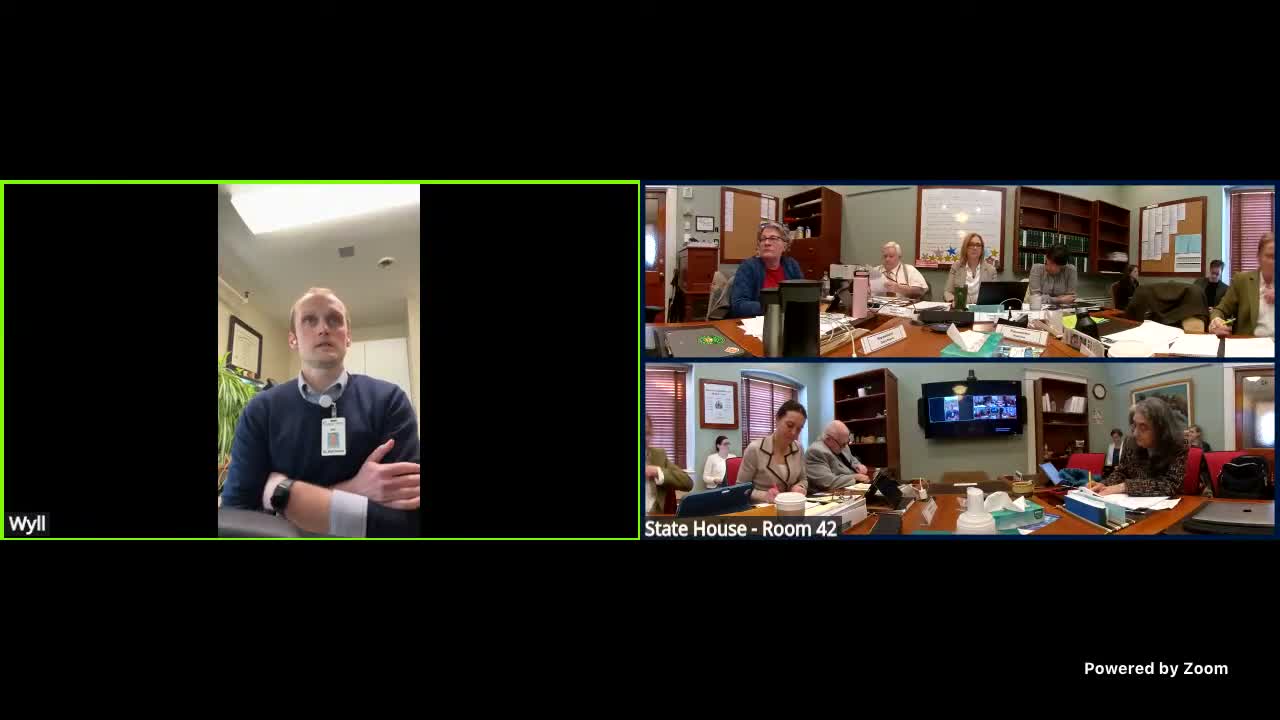
Summary
Dr. Will Everett, a family physician at Grace Cottage, told a legislative committee that prior authorizations for imaging and procedures often delay needed care, create financial and logistical burdens for patients, and require dedicated administrative staff; he urged revising H.585’s language so hospital‑based primary care practices aren’t excluded from relief.
Dr. Will Everett, a family physician and hospitalist at Grace Cottage Family Health and Hospital in Townshend, Vermont, told a legislative committee that section 11 of H.585 should be revised because current prior authorization practices create delays in care and impose substantial administrative costs.
"The design of the system consistently leads to delays in care," Everett said, describing prior authorization as a step insurers require before approving payment for a service and noting that the process is now standard practice across health settings.
Everett cited a recent KFF poll, saying "47 percent of insured adults had a delay or denial of medical, medication service or treatment within the past two years" and that "69 percent of insured adults" found prior authorization "burdensome." He told the committee he would provide written testimony with supporting materials.
He offered two clinical examples to illustrate the effect of delays. In one case, a woman in her 50s who briefly collapsed would have benefited from a 14‑day ambulatory heart monitor (a Zio patch) that could have been applied during the clinic visit; instead, insurance required prior authorization and the patient had to return four days later, creating logistical and financial strain. "We couldn't initiate the test to help figure out what was going on while she was literally sitting in front of me in the office," Everett said.
In another case, a patient with rebound tenderness underwent a CT scan after staff obtained authorization; the scan showed appendicitis and the clinic coordinated timely surgical care with a local surgeon. Everett used that example to show both the variability in turnaround time and the potential for in‑clinic care to avert emergency transfers when authorization is obtained quickly.
Everett described the administrative burden on small, hospital‑based practices: "We have less than 10 full‑time equivalent clinical providers. We have one full‑time administrative staff just to cover medication prior auths, and then we have two full‑time patient coordinators that handle all of our referrals, and on the prior authorizations for procedures and imaging studies." He said H.585 as drafted limits exemptions to independent practices and urged the committee to consider removing language that would exclude hospital‑employed primary care clinicians from relief.
Committee members questioned why prior authorizations were still occurring given Act 111, which took effect Jan. 1, 2025, and which exempts primary care physicians from prior authorization for services other than medications. The chair said the committee does not yet have a report with data on the law’s effects; Everett replied that prior authorizations had not "magically gone away," noting insurance specifics and certain scenarios still trigger prior authorization and that local administrative processes vary.
A member asked about approval rates for prior authorizations; Everett said he did not have exact numbers on short notice but estimated approvals were roughly "50/50" based on his staff’s recent experience and again offered to provide written follow‑up data.
On whether specialists might push authorization work onto primary care, Everett said administrative staff generally perform the work and that tasks can fall back on primary care teams, increasing cost and burden regardless of where the staff are housed.
Everett concluded that minimizing prior authorizations across practice settings—independent and hospital‑based—would reduce administrative costs and improve timely access to testing and treatment for Vermonters. The committee kept the testimony on the record; Everett offered to submit written materials, and the committee recessed until 1 p.m.