
Leominster schools introduce dedicated attendance team to combat chronic absenteeism
Get AI-powered insights, summaries, and transcripts
Subscribe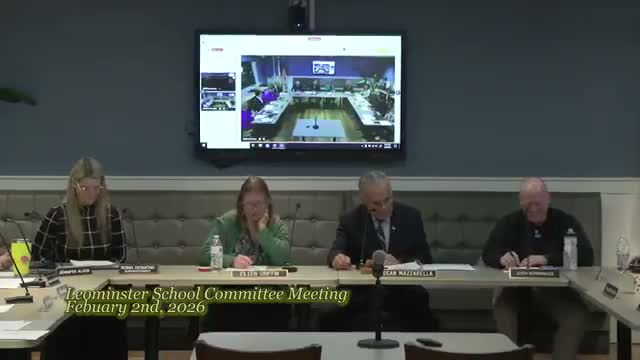
Summary
Leominster Public Schools introduced a district attendance unit that blends a full-time officer with part-time staff, data tools and community referrals; officials said chronic absenteeism is about 10% and described early successes including a student who reversed poor attendance.
Leominster Public Schools on Feb. 2 announced a new attendance unit intended to reduce chronic absenteeism across the district.
The superintendent said the district moved from a single high-school attendance role to a combined team: "we created a few part time 18 hour week positions to complement the full time attendance officer position and moved that all under our pupil services" (Jenny, attendance lead). Jenny told the committee that chronic absenteeism in the district registers at about 10%—roughly nine days—which places those students on the district's priority list.
The attendance team introduced itself and outlined responsibilities. Frankie identified himself as the full-time attendance officer who primarily serves the high school but supports districtwide efforts; Tom described a role rotating among middle schools; Alicia said she focuses on elementary schools. The team said it uses Open Architects to monitor daily attendance trends and to flag students for immediate outreach.
The presentation emphasized individualized outreach and community partnerships. "We partner with an agency called Fitchburg Resource Center," a team member said, and staff reported that referrals to the center have often produced measurable improvements in attendance. The team also described home visits and meetings with families as routine interventions to reestablish school routines and supports.
The committee heard a student testimony that illustrated the team's work. "My name is Carlos. I'm a senior here at CTI," Carlos said, explaining that he and school staff created a plan to address tardies and absences so he could qualify for co-op placement and graduation requirements.
Committee members pressed the team on measurement and reporting. Jenny and colleagues said daily tracking on Open Architects lets them identify students before they become chronically absent and measure short-term changes after interventions. The superintendent noted that state accountability reporting uses hard numbers and that individual case narratives cannot be submitted to the state file but that daily-district tracking shows improvement.
Members asked for recurring updates. One trustee asked for quarterly reports to identify areas needing resources; another asked that success stories and effective practices be shared among schools. The district said it will return with follow-up data showing trends and outcomes.
The presentation and student account underscored the district approach: proactive, relationship-based outreach supported by daily data monitoring and outside referrals rather than reliance on one-off school-level efforts.