Get Full Government Meeting Transcripts, Videos, & Alerts Forever!
Get email alerts on the Housing topic
No spam. Unsubscribe anytime.
College Park adopts ‘early lease’ ordinance limiting landlords’ renewal offers
Summary
The College Park Mayor and Council on Feb. 3 adopted Ordinance 25-013, an “early lease” law that limits when landlords may offer renewals and establishes civil fines and limited court-ordered relief; the measure was driven by sustained student testimony about aggressive early-renewal tactics.
College Park’s Mayor and Council on Feb. 3 adopted Ordinance 25-013 as amended, a local law that restricts how early landlords can offer lease renewals and adds civil penalties for violations.
The ordinance, described in detail by City Attorney Stephanie Anderson during the meeting, bars landlords from making renewal offers earlier than 180 days before the end of a tenant’s current lease and says landlords may not require a tenant to sign a successive lease until at least 15 days after the new lease has been sent to the tenant. The ordinance also sets civil fines and limited court remedies: "Any landlord or landlord's agent who violates this section commits a civil infraction punishable by a fine of not less than $500 for the first offense, and not less than $2,500 for each additional or subsequent offense," Anderson read aloud, and she said a court can order up to two months' rent as part of relief.
Why it mattered
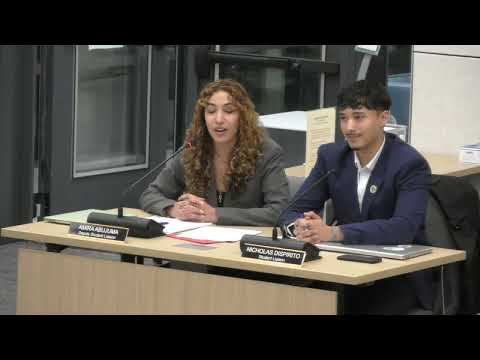
The ordinance followed months of work with student liaisons, landlord groups and city staff. The City Council majority cited repeated testimony from University of Maryland students who described aggressive renewal marketing and short deadlines that they said forced hasty, high-stakes decisions. "This early lease ordinance will go a long way in helping protect all College Park tenants, especially those who are most vulnerable to predatory leasing practices," Rubak Marani, student body president at the University of Maryland College Park, told the council.
Student and landlord perspectives
Students who testified described repeated contacts—flyers, daily emails and calls—pressuring them to sign renewal offers soon after moving in. Student Sami Syed said the ordinance was necessary because the tactics had “caused ... stress” and forced students to choose quickly under pressure.
Some local landlords and industry representatives supported the amended measure or expressed conditional support after technical edits. Sean Williams of College Living said his company welcomed the ordinance’s standards; Hugo Cantu of the Apartment and Office Building Association said his group moved from opposition to neutral after the amendments and asked the city to consider non-substantive, technical cleanups.
Council action and next steps
Council Member Simmons moved the ordinance as amended and the council adopted it by voice vote with no recorded opposition. The council instructed staff to correct administrative dates in the ordinance text (a 2026 date placeholder will be updated to reflect the prior 2025 public hearing) before final printing and codification. The city also signaled plans for outreach and education to landlords and tenants to explain compliance obligations and the new waiver process described in the ordinance.
Implementation details
Key provisions adopted include: a 180-day earliest renewal-offer prohibition; a transition rule that tenants need 15 days after receipt before being required to sign; a waiver process that must be in writing and acknowledged by the landlord within 10 days; and fines of at least $500 for a first infraction and at least $2,500 for subsequent infractions. The ordinance deletes earlier proposed "good cause" nonrenewal language and removes a requirement tying relocation assistance to court-ordered relief, per the council’s amendments explained by the city attorney.
What to watch
City staff and student liaisons emphasized education and enforcement as the next steps. The city attorney and staff will prepare explanatory materials for landlords and tenants and finalize the ordinance’s administrative details before it is codified in city code.
The council also heard unrelated public comments during the meeting on snow cleanup and volunteer relief efforts, redistricting process review and concerns about immigration enforcement activity in town. The meeting adjourned after council business.
(Reporting includes direct quotes from testimony and the city attorney’s reading of ordinance language.)