Crescent City Council accepts clean FY 2024–25 audit; auditor flags standard risks but no material weaknesses
Loading...
Summary
An independent auditor presented an unmodified (clean) opinion on Crescent City’s FY 2024–25 financial statements; the council voted to receive and file the audit after staff and auditors described routine audit risks and procedures.
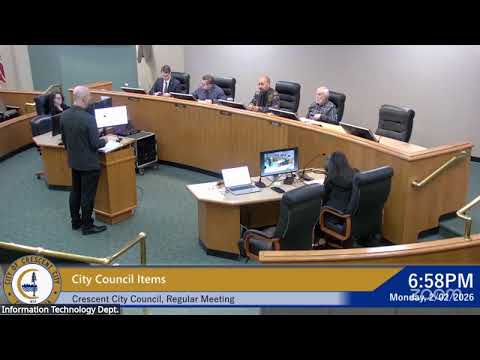
The Crescent City Council on Feb. 3 voted unanimously to receive and file the city’s fiscal year 2024–25 audited financial report after an independent auditor delivered an unmodified opinion.
Ahmed Badawi, the audit partner who led the engagement, told the council the firm issued a clean opinion and found the city’s financial statements to be "fairly presented in all material respects." He said auditors identified common audit risks — management override of controls, improper revenue recognition, estimation uncertainty, cash-handling risks at operations such as the RV park, and journal-entry posting controls — and described procedures the firm used to address those risks, including third-party confirmations and substantive testing. "We have issued an unmodified opinion, which in simple terms means a clean opinion," Badawi said.
City Attorney Rice confirmed that the council and officers are covered under the city’s insurance carrier in the event of litigation, distinguishing city coverage from separate harbor-district arrangements mentioned during public comment.
Mayor Wright moved to receive and file the audit report. Council members Altman, Greenholm and Chamblin voted yes; the motion passed. The council chair thanked auditors and staff for a timely and cooperative audit process.
The audit presentation included a summary of key numbers: the city’s unrestricted general-fund balance on the audited statements was reported at about $4.5 million, and pension liabilities were presented with sensitivity to the discount rate (reported at roughly $13.2 million under the auditors’ assumptions, varying with discount-rate changes). Badawi also noted forthcoming GASB accounting standard changes to watch for in 2026–2027.
Council members asked whether auditors obtain and review written policies; Badawi said auditors obtain policies, interview staff, compare practices to policy, and report deviations to management. The council will receive the auditor’s written communications as part of the audit package.
The council’s action was procedural: no additional policy changes were made at the meeting.