Get Full Government Meeting Transcripts, Videos, & Alerts Forever!
Get email alerts on the Zoning Ordinance topic
No spam. Unsubscribe anytime.
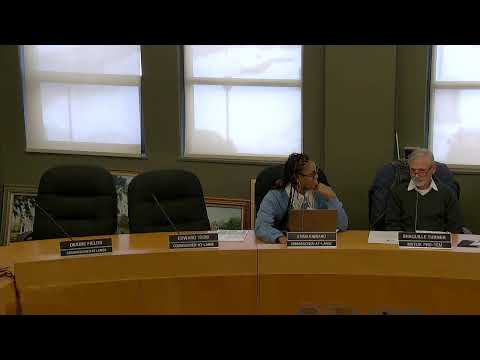
Planning commission walks residents through zoning ordinance, website navigation at public hearing
Summary
At a public hearing, commissioners and staff demonstrated the city zoning ordinance PDF and website, explained the difference between the community (master) plan and the zoning ordinance, and answered questions about site plans, special‑use permits, notice to property owners and grandfathering.
At a public hearing opened by Chairman Reid, staff walked residents through the city’s zoning ordinance and how to use the online PDF and hyperlinks to find permitted uses and standards. The presenter said the community plan shows how the city should look in “5 to 10 years,” while the zoning ordinance is the legal tool that enforces that vision.
Assistant Mr. Barton demonstrated the document’s table of contents and the permitted‑uses table, showing how hyperlinks can take a user directly to relevant sections. “You can click on that, and it should take you right to that section of that hyperlink to hopefully save some scroll time,” Mr. Barton said during the demonstration.
Staff described the practical distinctions in review authority: special‑use permits are recommended by the Planning Commission and approved by the City Commission, while site plans generally are approved by the Planning Commission. The presenter said site‑plan review remains necessary when changes trigger planning review.
Several residents asked whether property owners would be notified if a zoning map or parcel designation changed. Commissioners and staff confirmed that notices are mailed for special‑use hearings and that standard practice includes notice to owners and property within 300 feet when legal notice is required. “The map can’t be changed without a public hearing,” staff said, and added that the Planning Commission makes recommendations to the City Commission, which takes final legal action.
Staff also introduced a startup checklist for new businesses that will be posted on the city website and described required inspections and final certificates of occupancy. The presenter said the checklist and some webpage language remain under review with consultant McKenna and will be updated to reduce confusion for applicants.
The hearing closed after questions about legends, nonconformities and notification. Where an existing lawful use remains on a property, staff said that use is generally grandfathered under the new ordinance, while nonconformities will be considered by the Planning Commission on a case‑by‑case basis.
The commission did not adopt text changes during this hearing; staff said some mapping and clerical corrections may be recommended later and any substantive change will require the full public‑notice process and subsequent commission action.