Get Full Government Meeting Transcripts, Videos, & Alerts Forever!
Get email alerts on the State Legislation topic
No spam. Unsubscribe anytime.
Utah League director urges cities to organize as land-use and tax bills loom
Summary
Cameron Dale of the Utah League of Cities and Towns briefed Orem's council on the coming legislative session, highlighting land-use proposals (including opposed HB 184), property-tax and fee threats, and housing and infrastructure initiatives; he urged a single city liaison to receive League action alerts and daily briefings.
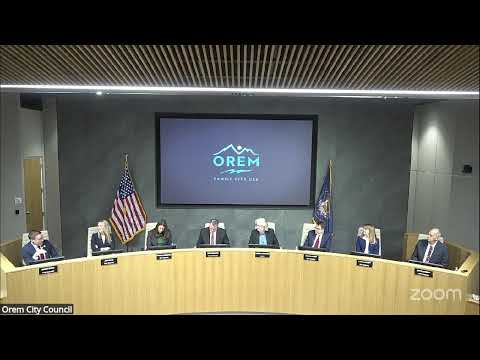
Cameron Dale, director of the Utah League of Cities and Towns, told the Orem City Council the upcoming legislative session will focus heavily on land use, tax and fee authority, and housing policy.
Dale said the League is tracking roughly 250 bills that could affect cities and towns and warned about a House bill (referred to in the session as HB 184) that would create a new "preferred land use" designation. "We're opposed to that bill," he said, explaining the proposal would allow property owners to pursue certain uses unless the city proactively said no within a brief window, which would raise legal questions about local zoning authority.
The League director identified three revenue areas that could change: property tax, the gas tax and related exemptions, and user-fee authority. He cautioned that proposals requiring voter approval for property-tax increases or capping city increases could meaningfully constrain municipal budget authority. Dale described efforts to define a reasonableness standard for transportation utility fees after the state's Supreme Court recognized those fees in litigation but left the question of what is "reasonable" unresolved.
On housing, Dale said the League supports state investment to unlock infrastructure that would allow entitled but unbuilt housing units to be built and described bills to consolidate state housing programs under a governor's office of economic opportunity and to increase use of surplus public land for housing. He highlighted a legacy-cities pilot that incentivizes converting rental housing to owner-occupied starter homes.
Dale urged each city to name a single legislative liaison to receive the League's daily briefing and targeted action alerts so local leaders can respond quickly when a bill moves through committee. "If you're following the nightly email, you have your liaison and those daily calls, then you're up to speed so that when the bad bill drops or the good bill is moving forward and you get an action alert saying, please contact your legislator, you're ready to rock," he said.
Council members asked about the League's priorities and how the city should engage; Dale recommended proactive outreach to local legislators, joining League subgroups, and participating in the League's daily session briefings.
The council did not take formal action on any specific bill but recorded assignments for members to participate in League workgroups and LPC (Legislative Policy Committee) subcommittees.