
Committee advances HB269 to stabilize ambulance payments, include medication costs in base rate
Get AI-powered insights, summaries, and transcripts
Subscribe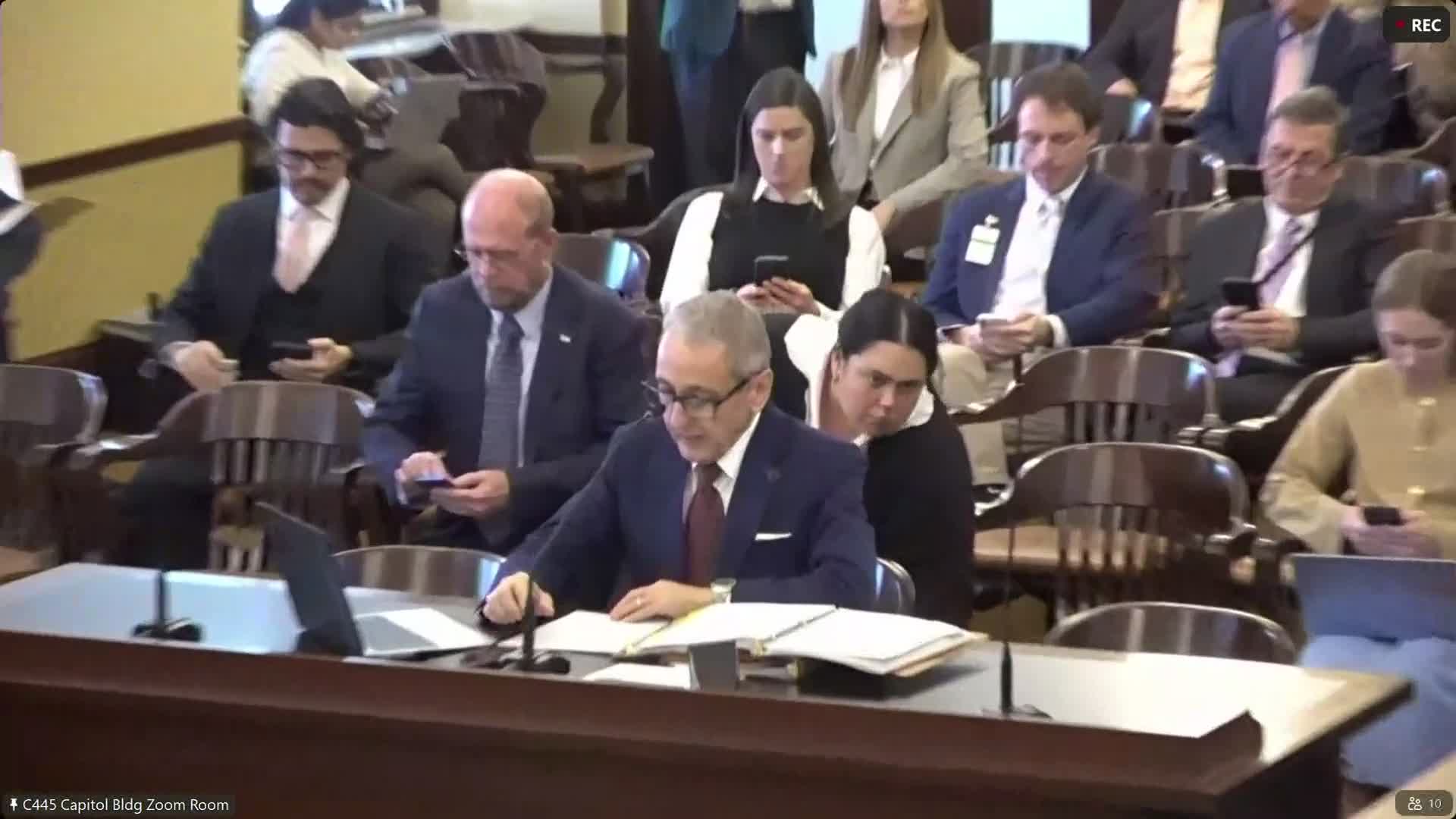
Summary
The House Business, Labor and Commerce Committee gave HB269 a favorable recommendation after sponsor testimony and stakeholder support; the bill would include medication costs in ambulance base rates, allow modest annual CPI-tied adjustments, preserve balance-billing prohibitions and remove an outdated sunset provision.
The Utah House Business, Labor and Commerce Committee on Feb. 5 recommended favorably on House Bill 269, a measure to standardize how ambulance providers are reimbursed and to reduce billing uncertainty for emergency medical services.
Sponsor testimony summarized the bill’s core changes: include medication costs in the base ambulance rate, limit provider charges to a base rate plus mileage, allow the Bureau of EMS to adjust the base rate once a year tied to the Medical Consumer Price Index, and remove a statutory sunset tied to earlier rate structures. The sponsor told the committee the changes “align payment rules with how emergency medical care is actually delivered,” and said the intent is stability rather than expansion of services.
Stakeholders who testified supported the measure. Kim Frost of Regence Blue Cross Blue Shield told the committee, “We’ve been working with the representative on this bill,” and thanked the sponsor for stakeholder collaboration. Mike Matthew, representing Gold Cross and former Ogden City fire chief, and Clint Smith of the Utah State Fire Chiefs Association also voiced support. Ben Armstrong of the World EMS Directors Association of Utah echoed those remarks and urged a favorable recommendation.
Representative Dunigan asked about the fiscal note; the sponsor said federal funds would cover roughly $702,600, the general-fund impact was shown as about $2,002,202, and a Medicaid share of about $41,300, for the total shown in the fiscal note. Representative Thurston asked why the bill removes a sunset instead of extending it; the sponsor replied the sunset was no longer needed after the rate-adjustment mechanism was tied to the CPI.
The committee adopted the bill’s second substitute and voted to pass the bill out of committee with a favorable recommendation. The sponsor closed by thanking stakeholders and saying the bill will be funded through the plan described in the fiscal note.
The measure now moves to the next step in the House process.