
Spanish Fork seeks $10M for Taxiway Bravo to ease general‑aviation congestion
Get AI-powered insights, summaries, and transcripts
Subscribe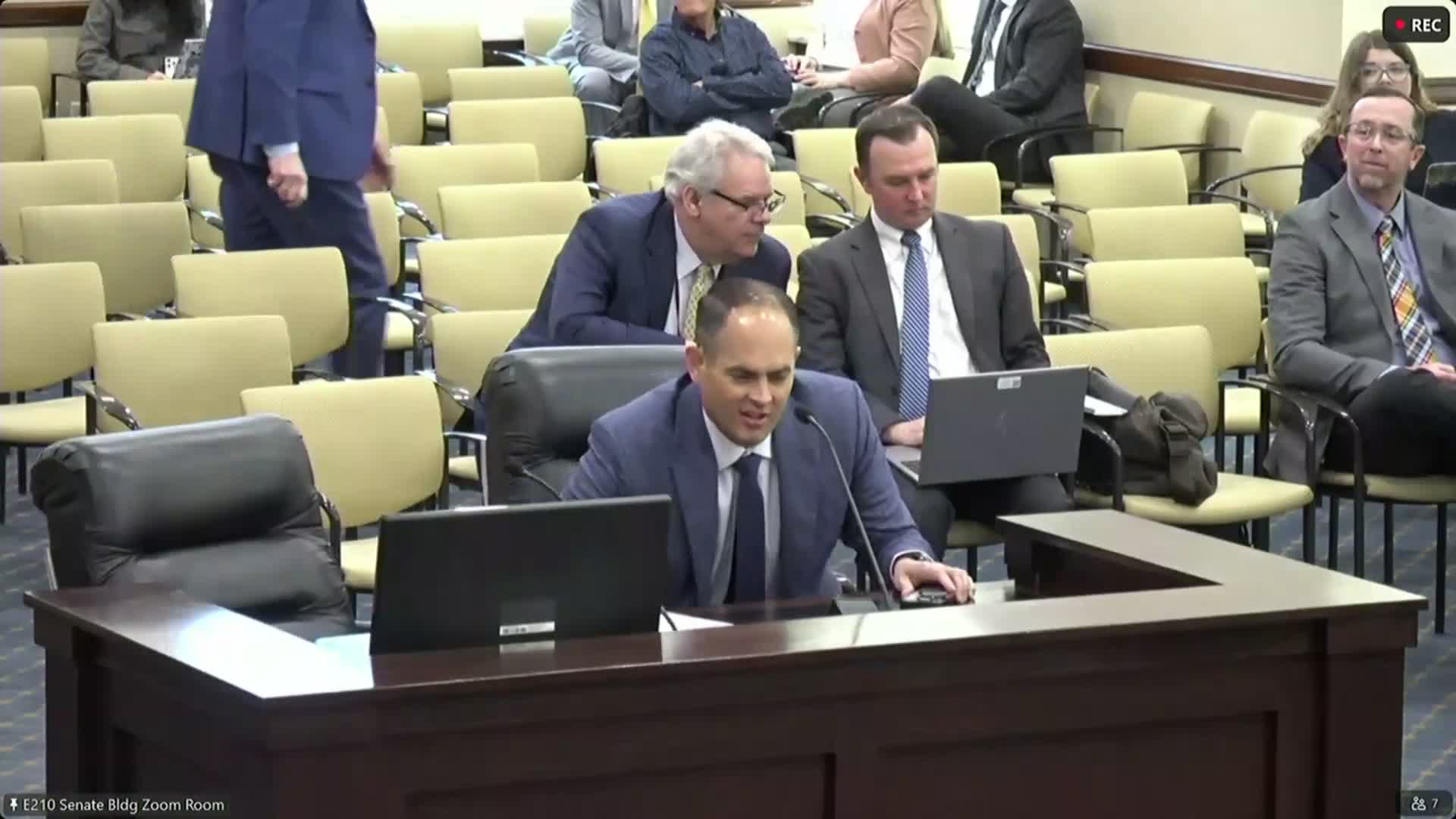
Summary
Spanish Fork city representatives and airport manager Seth Perrons asked the subcommittee to consider a $10 million RFA to build Taxiway Bravo (a second runway/taxiway) at Spanish Fork Airport, describing growth in general aviation since Provo converted to commercial operations and noting FAA and congressional support for multi‑phase funding.
Spanish Fork city representatives asked the subcommittee for assistance to build Taxiway Bravo, a roughly $10 million taxiway/runway project intended to relieve heavy general‑aviation traffic at Spanish Fork Airport.
Presenters said traffic shifted to Spanish Fork after Provo Airport moved toward commercial operations and that growth—largely from hangar development, flight training and inland port activity—has created taxi congestion. Seth Perrons (online) and local representatives said the project can be built in phases; the first third has funding, the second third could be achieved with a state contribution and recent federal appropriations, and the city is working with the FAA and Congressman Owens to secure additional federal dollars.
Members asked about funding sources and revenue offsets. Presenters suggested a mix of state, local and federal dollars (FAA appropriations and congressman support) and noted airport revenues tied to hangar construction and airplane registrations, though quantifiable airport revenue figures were not provided at the hearing. The city noted landing fees recently instituted to cover some operational costs.
What happens next: Presenters encouraged staff follow‑up to determine the best state funding source (aeronautics restricted account, airport improvement program, CIB loans or general fund request) and to coordinate timing with federal appropriations and FAA partnerships.