
House committee advances substitute to HB 70 to fund EHR, expand MAT and implement Medicaid billing for inmates
Get AI-powered insights, summaries, and transcripts
Sign Up Free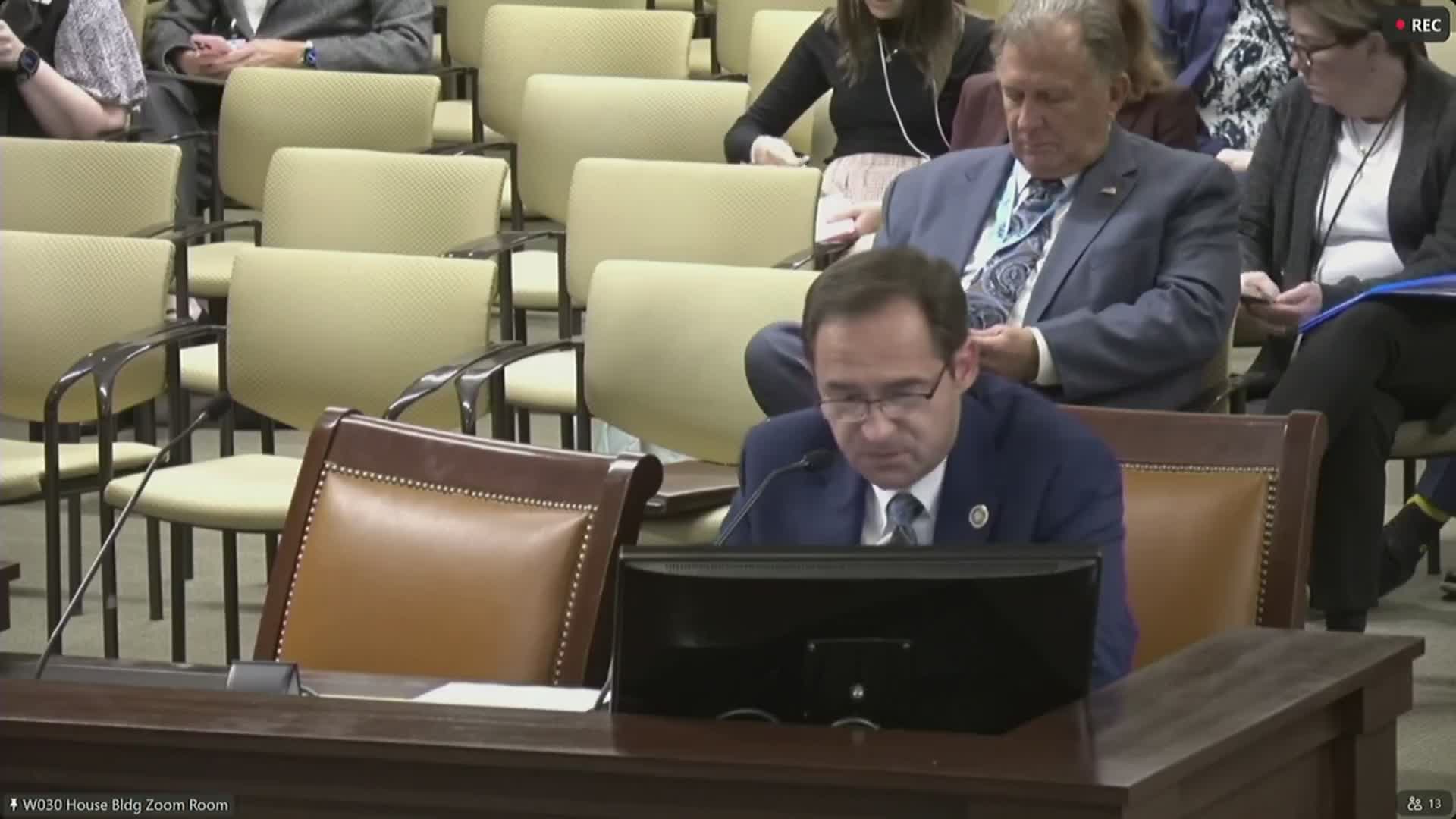
Summary
The House Health and Human Services Committee voted to recommend first substitute HB 70, which would allow a one‑time use of Medicaid stabilization funds to buy an EHR that supports Medicaid billing under an approved 1115 waiver, authorize non‑lapsing funds for high correctional health costs, require targeted opioid use disorder treatment and fund an AI monitoring pilot.
Representative Elison, sponsor of the first substitute to House Bill 70, told the House Health and Human Services Committee the measure is designed to finish implementation of an 1115 waiver that allows Medicaid billing for certain correctional health services during the final 90 days before an inmate’s release. The substitute would permit a one‑time transfer from the Medicaid Growth Production and Budget Stabilization Account to purchase an electronic health record (EHR) capable of billing Medicaid and would authorize other technical changes to smooth correctional health budgets.
"If we don't put the landing gear down, which is the kind of the EHR, EMR, it's gonna it's not gonna end pretty," Elison said in his presentation, urging the committee to approve the substitute so the waiver can be used effectively.
The bill also requires the Department, in consultation with the Department of Corrections, to prepare and implement a plan providing opioid use disorder treatment to certain inmates, emphasizing medication‑assisted treatment (MAT) for the 90 days prior to release and continuity with community providers after release. Dr. Mark Wissner, director of Correctional Health Services, told the committee the existing EHR lacks a billing module and coding system and that an updated system is the primary obstacle to billing under the waiver. "Currently, we are hamstrung with our EHR. It does not have a billing module and, coding system," Dr. Wissner said.
Sponsor and witnesses told the committee the proposal includes a one‑time appropriation of $500,000 for a pilot AI program that monitors outbound inmate communications and flags phrases for human review; the sponsor said the AI does not interface directly with inmates and would be used only to identify calls or messages that merit follow‑up. Committee members asked whether vendor selection and safeguards would be handled through state RFP and purchasing rules; witnesses confirmed vendor choice would follow those procurement procedures.
Committee members also pressed on fiscal details. Representative Ward asked whether the one‑time sums and ongoing maintenance costs were fully reflected in the fiscal note; the sponsor said the substitute published that day did not yet have a revised fiscal note but expected the new exposure to be limited to the $500,000 pilot plus the one‑time EMR purchase, and that CHS anticipates that billing revenue would cover incremental ongoing maintenance and coding costs.
After questions and without public comment, Representative Monson moved to advance the first substitute; the committee approved the motion and later voted to recommend HB 70 (first substitute) favorably out of committee.
What happens next: the bill moves from committee to the floor calendar with a favorable recommendation. If enacted, the law would allow the department to buy an EHR that supports Medicaid billing for covered services during the final 90 days of incarceration, require a DOC/CHS plan for opioid treatment for targeted populations and permit a one‑time pilot for a monitoring tool.
Sources and attributions: quotes and factual descriptions in this article come from Representative Elison's presentation and Dr. Mark Wissner's testimony to the House Health and Human Services Committee as recorded in the committee transcript.