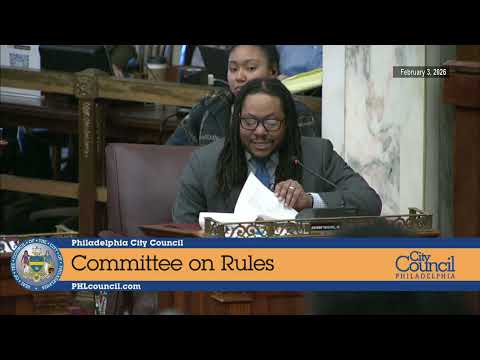
Rules Committee approves amendment and advances 3-year moratorium on unlicensed dog breeding
Loading...
Summary
After extensive testimony from animal-welfare groups, veterinarians, hobby-breeder groups and community organizations, the Rules Committee adopted an amendment and reported bill 250,989 (a 36‑month temporary moratorium on unlicensed dog breeding and transfers) out of committee with a favorable recommendation for first reading.
Supporters of bill 250,989 — including ACT/ACCT Philly, the Pennsylvania SPCA and animal-law experts — told the Rules Committee that unlicensed backyard breeding has driven a surge in shelter intake, spread disease and strained city and nonprofit resources. Sarah Barnett (ACT/ACCT Philly) said the group has taken in more than 291,000 animals since 2012, that 2025 intake topped 7,400 dogs and that the shelter expects to exceed 8,000 this year. “It’s an average of 22 dogs entering our shelter every single day,” Barnett said.
Penny Ellison (animal-law instructor and Hand to Paw board member) told the committee a temporary moratorium is a common municipal tool aligned with state law when a local public-health, animal-welfare or municipal-services problem is acute; she noted the draft ordinance includes an exemption for breeders licensed by the Pennsylvania Department of Agriculture.
Julie Klim, CEO of the Pennsylvania SPCA, described clinical and behavioral burdens on shelters, cited parvovirus outbreaks among puppies and urged the council to use the moratorium to buy time for long-term solutions. “If we could allay this and put all of the cost and effort we put towards unlicensed breeding towards providing more services to the community, we could make a huge impact and keep pets in their homes,” Klim said.
Opponents including the Pennsylvania Federation of Dog Clubs and American Kennel Club witnesses warned the committee a broad, multi‑year moratorium could harm responsible hobby breeders, dog-sport communities and supply lines for service animals, and argued the city should pursue targeted enforcement and support programs rather than a blanket ban. Charles Hall (AKC) said the ordinance risks punishing responsible breeders and driving irresponsible breeders underground.
Committee members and witnesses discussed enforcement tools (education, subsidized spay/neuter, fines enforced by ACT), exemptions tied to state kennel licensure, and supportive alternatives. The committee adopted an amendment to the ordinance and then voted to report bill 250,989, as amended, with a favorable recommendation for first reading. The transcript records voice votes with the chair announcing motions carried; roll-call tallies were not recorded in the hearing minutes.