Get Full Government Meeting Transcripts, Videos, & Alerts Forever!
Get email alerts on the Council Votes topic
No spam. Unsubscribe anytime.
Geneva council approves four emergency ordinances to reallocate funds and amend the 2026 budget
Summary
At its Feb. 2 meeting, the City of Geneva City Council passed four emergency ordinances to transfer funds between capital and operating accounts and to amend the 2026 budget; the city manager also reported on grant awards, required water‑system surveys and upcoming procurements.
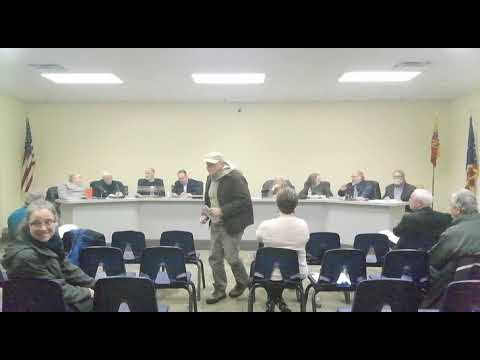
The City of Geneva City Council on Feb. 2 approved four emergency ordinances to move funds between construction and operating accounts and to adopt a 2026 budget amendment.
Ordinance No. 3402 authorizes transfers from a Gen 3 construction fund to the wastewater and general funds; council members voted to waive three readings, declared the ordinance an emergency and passed it on a roll‑call vote. Council then approved Ordinance No. 3403, which moves Elm Street infrastructure project funds to the water fund, again waiving readings, declaring an emergency and passing the measure. The council next approved Ordinance No. 3404, allowing the director of finance to temporarily advance money from the general fund to support the FY24 Safe Streets for All grant, and Ordinance No. 3405, an amendment to the 2026 budget (appropriations and fund transfers noted in Exhibit A). Each ordinance was approved following motions to waive required readings and to declare an emergency.
City Manager Burkett used the manager’s report to highlight several items tied to near-term operations and capital work. She said the city was awarded $11,310 through NOPEC/GRAMA and that, with previously escrowed monies, the city has just under $34,000 available for energy‑efficiency projects such as window replacements in the recreation and fire department facilities. "We've been awarded additional funds from NOPEC through the GRAMA program in amount of $11,310," Burkett said.
Burkett also told the council the water department must complete 251 initial cross‑connection/backflow surveys under Ohio administrative code and recommended contracting Hydro Corp to complete the surveys. She identified a first‑year cost of $43,145.34 to finish the initial surveys and proposed a five‑year service plan averaging about $10,003.35 annually thereafter to meet ongoing regulatory requirements. Council members asked about contract length and out‑clauses; Burkett said Hydro Corp came recommended by state regulators and that multi‑year planning was proposed to ensure compliance.
On procurement and capital projects, Burkett said the city will advertise an RFP for exclusive refuse collection, curbside recycling and disposal services (advertising targeted for Feb. 12 and Feb. 19 with bids due Feb. 26) because the current agreement with Waste Management expires March 31. She also updated the council on the FY26 Long Street waterline replacement (an OBWC‑funded project with a $512,008.44 bid) and said contractor TK Excavating has requested a 60‑day extension to the May 22 deadline; staff will pursue the extension with the OVWC.
Burkett further reported that the dispatch and communications system used by public safety is outdated and no longer supported. The upgrade was budgeted at $132,000 and the city received a vendor quote for $131,259 from Hudson Communications; staff recommended moving forward under Resolution 3658.
The meeting closed with administrative reminders about the comprehensive‑plan community survey (open through mid‑March), a community open house April 1 at the Dark Room, and a Feb. 10 visit by the Ashtabula County treasurer’s office for in‑chambers tax services.
The meeting record shows each of the four ordinances (Nos. 3402–3405) was advanced with motions to waive readings and declare emergencies and then passed by roll‑call vote. No recorded motions to table or defeat the items were made; next procedural steps are the usual administrative implementation of the ordinances and any actions required by contract or grant terms.