
Jackson County weighs options for regional dispatch, EMA levy after city briefing
Get AI-powered insights, summaries, and transcripts
Subscribe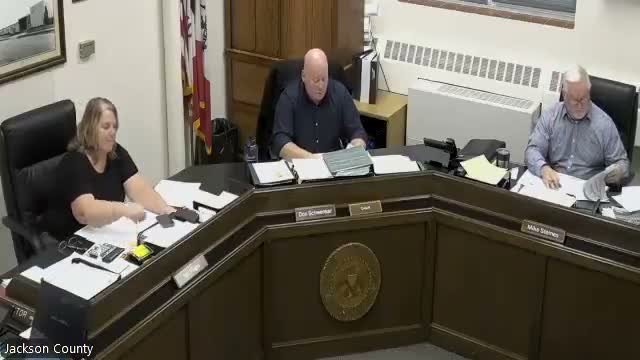
Summary
City manager Josh Bolt told the Board of Supervisors that moving dispatch to a consolidated regional model could be costly and urged county review of per‑capita EMA levies, possible hospital support and legal guidance before committing funds for fiscal year 2028.
Don Swicker, chair of the Jackson County Board of Supervisors, heard a detailed update Feb. 3 from Josh Bolt, city manager in Lococo, on efforts to regionalize 9‑1‑1 and dispatch services and possible funding through the county’s EMA process. Bolt said discussions with neighboring cities, contractors and county staff are ongoing and that decisions made now would most directly affect fiscal year 2028 budgeting.
Bolt described two primary funding scenarios under consideration: a per‑capita EMA agreement in which participating cities contribute to an EMA levy, or the county taking full financial responsibility under a general services levy and keeping dispatch staff in their current locations. He urged engagement from Jackson County Regional Health Center and the county attorney’s office to craft an agreement the county’s legal staff would approve. “I may, within the next month or two, request a draft support letter from you … approaching the hospital,” Bolt said.
Bolt cautioned that moving equipment and operations could be expensive and uncertain. He said an IT contractor is preparing a high‑level estimate and that a “million and a half dollar” figure is plausible to relocate and retrofit facilities, an amount that would “totally crush this question” for elected officials and taxpayers if confirmed. He also said the hospital’s likely contribution — if any — would be a modest amount (he referenced a $50,000 example) and that hospitals currently represent a small share of EMS call volume in the county.
Supervisors and city representatives debated the practical authority of an EMA to require contributions from cities and whether an EMA levy could be used to collect county funds that would then be used to pay city employees who would remain city staff under a per‑capita arrangement. “Does it have the legal authority to enforce that on the other cities through EMA?” a supervisor asked; Bolt said the county attorney’s guidance will be needed.
Board members pressed for clearer numbers for the FY27 budget process and agreed the work should continue without affecting the board’s current FY27 appropriations. Bolt proposed two near‑term steps: ask the hospital for a commitment letter and have county counsel draft options for an EMA‑based arrangement or a county takeover so supervisors can decide which funding path to include in future budgets.
Next steps: supervisors asked staff to circulate the current alternative scenarios and figures in writing and to follow up with the county attorney; no formal motion or funding commitment was taken at the meeting.