Get Full Government Meeting Transcripts, Videos, & Alerts Forever!
Get email alerts on the Case Review Workflow topic
No spam. Unsubscribe anytime.
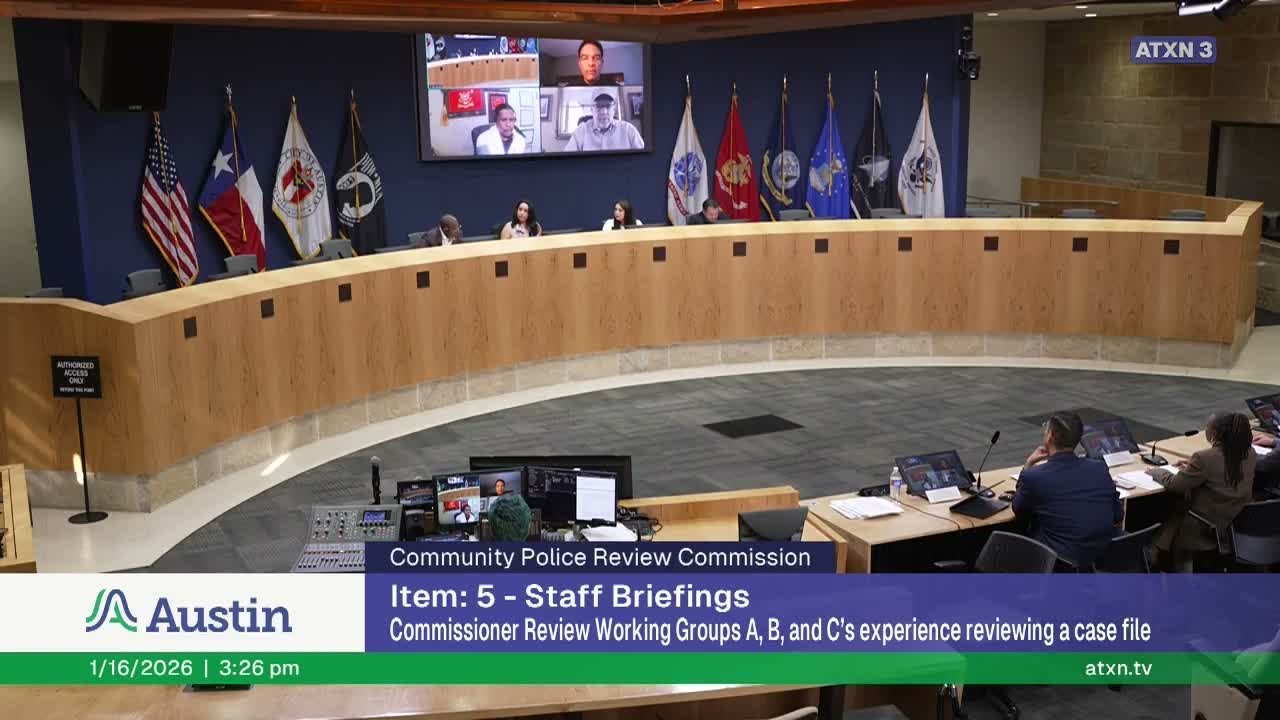
CPRC debates case-review workflow and closed-session limits as working groups begin presenting
Summary
Commissioners reviewed the working-group triage process, reiterated a minimum three-commissioner review rule before a recommendation is presented, and sought legal clarifications about closed sessions and what information can be publicly disclosed in case summaries.
Commissioners spent the bulk of the meeting focused on the CPRC’s case-review workflow and how to balance deliberation with open-meetings requirements.
Multiple commissioners described the working-group structure (groups A, B and C) and said triage is operating but uneven due to new-member onboarding and access issues. The commission reiterated that, under the adopted workflow, a minimum of three commissioners must fully review a case and reach consensus before a working-group recommendation is presented to the full body. “So we need to have at least 3 commissioners fully review the case, come to a consensus,” Acting Chair Vice Chair Commissioner Franco said, explaining the checks-and-balances in current practice.
Questions surfaced about permissible deliberation outside public meetings and whether working groups can hold private deliberations without triggering Texas open-meetings constraints. Commissioners asked whether closed sessions are the right venue for case deliberations and who must be present during those sessions. The commission’s legal guidance is pending; Gail McCant and staff noted that closed (executive) sessions are for legal discussions and briefings and that a chair can request executive-session briefings with counsel and, if needed, internal affairs present.
Commissioner Flood and others stressed practical concerns about moving cases forward when one member lacks access, and suggested fail-safes to avoid single points of failure. Several commissioners urged building a consistent template for case summaries that identifies the policy trigger and marks whether policy elements were satisfied — a format Commissioner Pena said she used to accelerate consensus with her co-reviewer.
On confidentiality and public summaries, commissioners debated what can be disclosed. One commissioner observed that policy compliance (whether required steps happened) is public record and can be stated without releasing identifying details; others warned that prematurely releasing officer names or confidential details could jeopardize cooperation from APD and slow future access. The commission agreed to await legal counsel’s full guidance before finalizing redaction rules and public-report templates.