Get Full Government Meeting Transcripts, Videos, & Alerts Forever!
Get email alerts on the Rezoning East 22nd topic
No spam. Unsubscribe anytime.
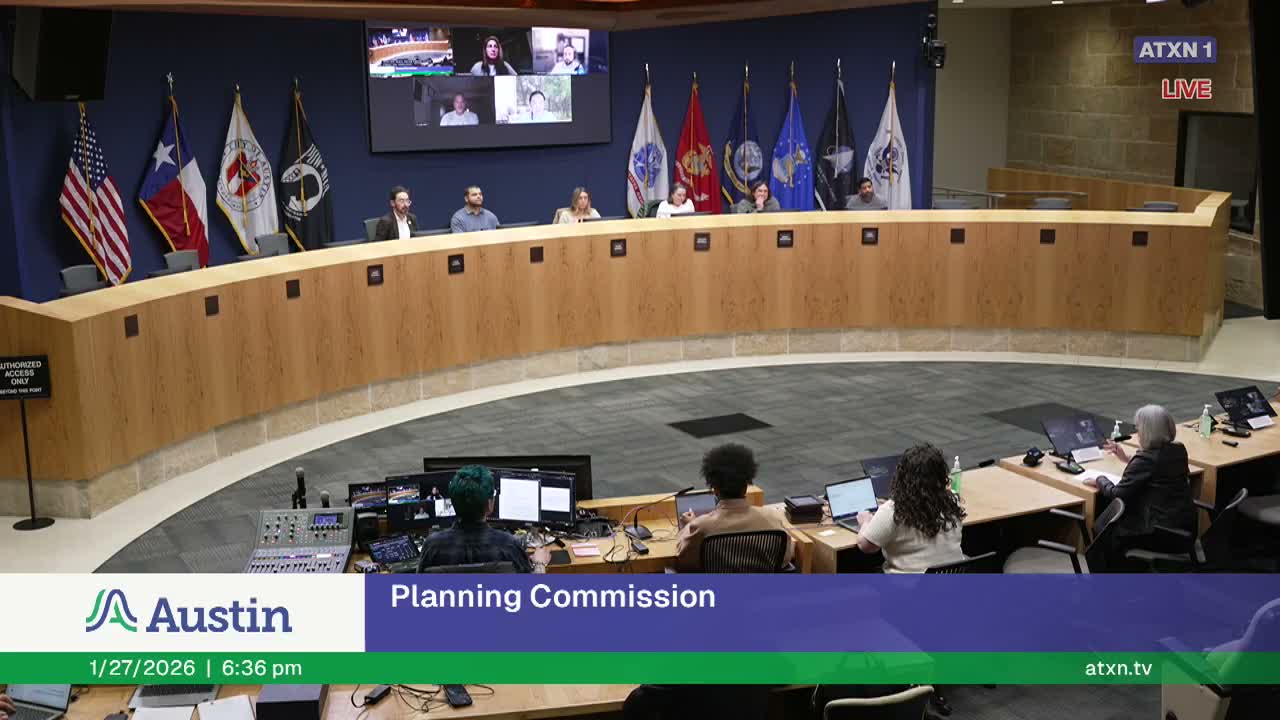
Planning Commission approves rezoning and plan amendment for East 22nd Street despite neighborhood objections
Summary
The Planning Commission voted to recommend staff’s plan amendment and rezoning for 2108–2110 East 22nd Street, allowing a small restaurant, limited office space and a reconfigured community garden. Neighbors cited parking, traffic and environmental concerns; the applicant offered restrictive covenant elements and a $10,000 garden improvement commitment.
The Austin Planning Commission on Wednesday recommended approval of a plan amendment and rezoning for 2108 and 2110 East 22nd Street, advancing a proposal to replace an informal gravel lot and garden with a two‑story, neighborhood‑scale building housing a breakfast‑and‑lunch restaurant and small offices.
Marie Meredith of the Planning Department told commissioners staff recommends changing the future‑land‑use designation from single‑family to neighborhood commercial and granting LR‑CO‑NP zoning to conditionally allow the proposed uses. Applicant representative Drew Rafael said the project would retain about 4,000 square feet of garden, build roughly 2,800 square feet of interior restaurant space plus a 500‑square‑foot patio (about 3,200 square feet total), and provide roughly 28 on‑site parking spaces compared with an informal ~20‑space gravel lot today. Rafael said the team has agreed in a private covenant to maintain the garden and offered $10,000 in on‑site improvements to the Blackland Community Development Corporation.
Neighbors pressed the commission on several fronts. Marva Overton, president of the Blackland Neighborhood Association, said the project would “encroach” commercial uses into residential streets and worsen parking and safety problems, questioning whether the promised on‑site parking would be sufficient. Overton also said the garden has not been accessible in practice to the neighborhood and described the $10,000 commitment and one year of gardener support as inadequate.
Resident Ora Houston, who said she has lived on East 22nd since the 1950s, told the panel the proposal runs counter to the neighborhood plan and urged commissioners to reject commercial zoning that fronts the interior of the neighborhood.
Rafael and applicant representatives emphasized that hours would be limited to breakfast and lunch with a covenant limiting typical service to 7 a.m. to 4 p.m. and that private events would be an exception. “We’re primarily focused on breakfast and lunch service,” Rafael said, adding that the garden would remain viewable and not be walled off but that it would remain private property without a public access easement.
Commissioners asked about traffic, the potential for site‑plan triggers to require a traffic impact analysis at the site‑plan stage, and whether the applicant would continue neighborhood outreach. Commissioner Maxwell, who moved to approve staff’s recommendation, noted the project could help enliven the corridor while urging continued negotiation about restrictive covenants. Commissioner Skidmore voted against the motion citing concerns that the restaurant and office combination added little community benefit and risked commercial encroachment into a residential block. The motion passed 9–1.
Next steps: the recommendation will be forwarded to City Council. Planning staff and the applicant said site plan reviews and any required traffic analyses will occur later in the review process.