Senate committee hears broad support and sharp questions for bill to end some automatic adult charging of youth
Loading...
Summary
Senate Bill 323 would remove 11 offenses from Maryland—s automatic adult-charging list and require early judicial review on a case-by-case basis; proponents say it will reduce racial disparities, delays and violations of federal juvenile separation rules, while prosecutors and some local officials warned of capacity and implementation concerns.
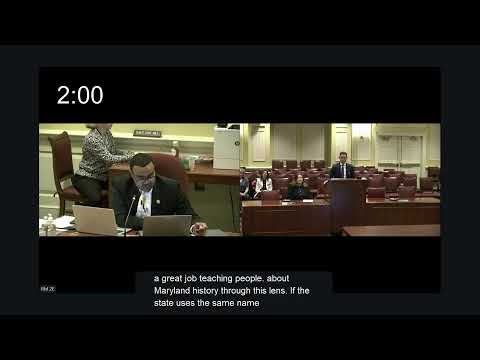
Senate Bill 323, introduced by Senator Smith, would narrow Maryland—s automatic adult-charging regime by removing 11 enumerated offenses from the list that now forces many 14- to 17-year-olds to start in adult court. The sponsor framed the measure during testimony to the Senate Judicial Proceedings Committee on Feb. 4, citing the state—s long juvenile-justice history, racial disparities in adult charging and federal compliance problems under the Juvenile Justice and Delinquency Prevention Act.
The acting secretary of the Department of Juvenile Services, Betsy Fox Tolentino, told the committee the bill is about "public safety and fairness," arguing developmentally appropriate judicial review and timely access to treatment lower recidivism and free capacity in juvenile detention. Attorney General Anthony Brown said the measure implements recommendations from Maryland—s equitable justice collaborative and proposed a technical amendment to add a "pattern of violent crime" exception for implementation. Both urged a favorable report.
Opponents, including representatives of the Maryland State's Attorneys Association and several county prosecutors, cautioned that the juvenile system currently lacks consistent, statewide capacity to absorb a sudden increase in cases and that adults sometimes remain in juvenile facilities for operational reasons. Pam Chung, juvenile division chief for the Baltimore City State—s Attorney—s Office, said many counties already struggle to provide timely counsel and services and questioned some of the data cited by proponents.
Committee members pressed DJS on operational details: the secretary said DJS has expanded beds and programming, added staff and launched a public dashboard of outcomes; she cited data showing that many youth charged as adults are ultimately dismissed or transferred back to juvenile court and asserted the change would reduce duplicative hearings and delays. Senators asked about statutory burdens of proof at waiver hearings, longitudinal recidivism data, and whether the change would shift burdens to public defenders.
The bill—s supporters point to studies (CDC, DOJ, National Academy of Sciences and state reconviction figures) showing transfer to adult court is associated with worse outcomes and higher violent recidivism. Opponents say case-by-case judicial review is already possible and that removing automatic charging could limit accountability for the most serious violent crimes unless carefully drafted.
Next steps: Committee members asked parties to share detailed data on transfer rates, outcomes and implementation specifics. No committee vote was recorded in the transcript; sponsors and agency witnesses signaled willingness to work on amendments to address capacity, reporting and public-safety safeguards.
Attribution: Quotes and attributions in this article come from participants who testified at the hearing: Senator Smith (sponsor), Acting Secretary Betsy Fox Tolentino (Department of Juvenile Services), Attorney General Anthony Brown, and Pam Chung (Baltimore City State's Attorney's Office).