Senate committee hears proposal to create stakeholder advisory council for Maryland Office of Health Care Quality
Loading...
Summary
Supporters told the Senate Finance Committee that SB 240 would create a 22‑member, nonbinding stakeholder advisory council to improve OHCQ transparency, require biannual public meetings and post summary reports; advocates cited missed inspections, long ER waits and delayed investigations as reasons to establish the council.
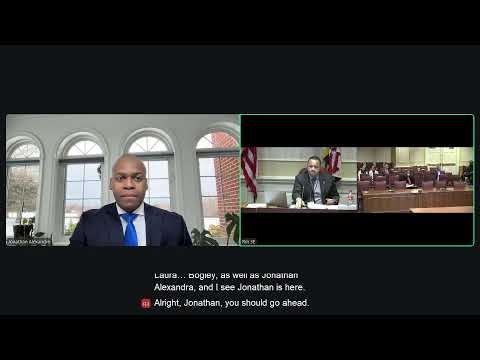
Senate Finance Committee members heard testimony on SB 240, a bill to establish a 22‑member stakeholder advisory council to advise the Office of Health Care Quality (OHCQ) and post periodic summary reports online. Sponsor testimony described the council as a nonregulatory forum to improve transparency and public trust, require OHCQ updates on inspection and complaint metrics, and include public comment at meetings.
Why it matters: Multiple witnesses described persistent failures in statewide oversight. "Maryland unfortunately has had a history of challenges in providing sufficient regulatory oversight of our healthcare facilities," the sponsor said, citing long emergency‑room wait times and gaps in nursing‑home inspections. Dr. Anna Palmisano of Marylanders for Patient Rights said the advisory council would help restore public trust and provide constructive feedback to OHCQ. Sarah Westrick of AARP Maryland told the committee the council would help the office better understand challenges facing patients, families and frontline workers.
What supporters said: Testimony from advocacy groups and unions tied the proposal to concrete problems: Disability Rights Maryland recounted pending complaints dating to 2021, including allegations of prolonged seclusion and delayed investigations; SEIU and frontline representatives urged more oversight of staffing changes and unlicensed assisted‑living operations. "This bill will increase transparency, improve the timeliness of investigations, and ensure the effectiveness of the process to correct problems," Tamlyn Kelly of Disability Rights Maryland said.
Agency engagement and fiscal questions: The sponsor said he had met with OHCQ leadership and that OHCQ submitted written concerns about workload and costs; he told the committee the council would meet virtually twice a year and that requested metrics are already tracked by OHCQ, estimating a minimal workload and no new recurring cost.
Opposition and caveats: Opposition witnesses and some committee members asked whether the council’s scope and membership could create duplication with existing oversight bodies and whether selecting the council chair by the OHCQ director would undermine independence. The sponsor said the chair selection ensures communication between OHCQ and the council but acknowledged concerns could be discussed in drafting amendments.
Next steps: The committee took testimony but did not vote on SB 240 during the hearing.