Expert outlines trauma‑informed, team‑based approach to suspected elder abuse

Forensic Technology Center of Excellence (RTI International) webinar · February 4, 2026

Get AI-powered insights, summaries, and transcripts

Subscribe
AI-Generated Content: All content on this page was generated by AI to highlight key points from the meeting. For complete details and context, we recommend watching the full video. so we can fix them.

Summary

Dr. Pat Speck summarized evidence-based signs of elder abuse, communication techniques for clinicians working with sensory and cognitive vulnerabilities, and how coordinated community responses and forensic nursing support investigations and survivor safety.

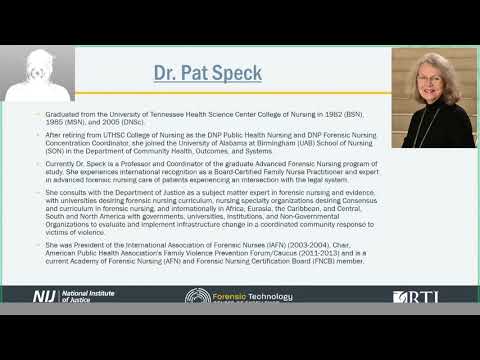
Dr. Pat Speck, a professor and coordinator of the graduate advanced forensic nursing program at the University of Alabama at Birmingham School of Nursing, urged clinicians and community responders to use trauma‑informed, team‑based methods when elder abuse is suspected.

Speck opened the RTI Forensic Technology Center of Excellence webinar by noting demographic shifts and prevalence estimates that increase the public‑health urgency: as the U.S. population ages, a larger share of residents will be retirement age, and studies suggest many older adults experience abuse while only a fraction of incidents are reported.

Speck said clinicians should start by stabilizing medical needs, assessing cognition and capacity, and documenting findings carefully. "The forensic nursing role is a small piece of the investigative pie," she said, noting that accurate documentation — including verbatim quotes when appropriate — can be decisive later in court. She advised, "Listen twice as long as you talk," and recommended practical communication steps: use large, high‑contrast print, face the person to allow lip‑reading, eliminate background noise, and read fine print aloud when needed.

The presentation described common indicators of abuse and neglect clinicians should watch for: unexplained bruises or pressure ulcers, restraint‑pattern injuries, signs of sexual assault, sudden changes in behavior or finances, unexplained transfers of assets, and medical signs that may point to assault (for example, subdural hemorrhage after head trauma). Speck emphasized that some injuries in older adults—such as contrecoup brain bleeding after a fall—require prompt imaging because they can deteriorate rapidly.

Financial exploitation—ranging from technology and lottery scams to inappropriate use of bank cards or loans in an elder's name—was stressed as a frequent, damaging form of abuse. Speck said investigations of financial abuse typically require multi‑disciplinary cooperation between providers, banks and adult protective services.

On decision‑making capacity she distinguished clinical "capacity" (task‑specific judgment assessed by clinicians) from legal "competency" (determined by a court), and urged teams to gather collateral information from primary providers or family when possible.

Speck reviewed examples of coordinated community responses developed under Department of Justice funding, saying these models brought together five systems—health care, probate courts, law enforcement, adult protective services and community agencies—to triage concerns, prioritize advocacy and close gaps in medical forensic services. She noted hospitals commonly use risk‑management, patient safety and forensic nurses to investigate potential abuse when an elder is hospitalized.

In closing, Speck reiterated that reports of suspected life‑threatening events should trigger 911 and adult protective services and that many states provide legal immunity for good‑faith reporters. During Q&A she acknowledged research gaps on racial and ethnic differences in dementia presentation and called for improved access and equity in care and research.

The webinar recording and reference materials were posted by the host after the session; organizers encouraged attendees to download slides and complete a post‑event survey. The session provided clinical guidance and system‑level examples intended to help communities build or strengthen coordinated responses to suspected elder abuse.