
Council reviews police move funding and fire apparatus and ladder replacements
Get AI-powered insights, summaries, and transcripts
Subscribe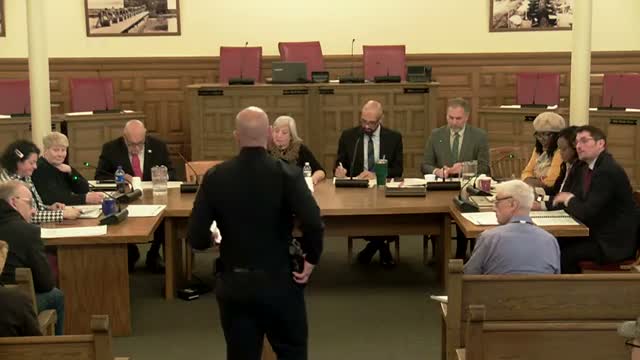
Summary
Council heard requests to authorize bonding for police facility move and equipment upgrades including a tactical training 'shoot house,' radio antenna and gym equipment, and for the fire department to replace a hazardous‑materials apparatus and add ground ladders due to long lead times; staff pledged to bond only for money actually spent.
The Syracuse City Council heard presentations from police and fire leadership on capital needs tied to facility moves and equipment replacement.
First Deputy Chief Richard Alserca detailed a request to authorize up to $1,000,000 in bonds to support the police move to a new facility, cover movers, interior and exterior signage, a radio antenna to ensure 9‑1‑1 and car connectivity, audiovisual and ComStat equipment, and a tactical training 'shoot house' for simulation training. Alserca said the shoot house will use simulation ammunition and stressed the training and officer wellness benefits of new gym equipment and a functional fitness area. "We will not bond for any of the money we don't spend," he told the council, noting the request is a planning authorization rather than a guaranteed full drawdown.
Fire Department leadership requested authorization for a new hazardous materials apparatus to replace a 2010 vehicle that will be at the end of its useful life by the time a replacement arrives (estimated four‑year lead time). The chief said Syracuse maintains a Type‑1 hazmat team and that mutual‑aid arrangements are used for large incidents. Councilors also discussed funding ground ladders via the capital plan because supply chain lead times on ladder procurement can reach 18 months; the department said ladders are aluminum and have varying lifespans depending on use and testing by third‑party vendors.
Councilors asked technical questions about simulation ammunition, ladder reach for taller buildings and procurement sources; staff said much equipment is procured off pre‑existing cooperative contracts (Sourcewell) and that ongoing maintenance and replacement costs exist for training consumables.