
Will County committee debates AI policy framework; staff directed to survey departments and prepare outline
Get AI-powered insights, summaries, and transcripts
Subscribe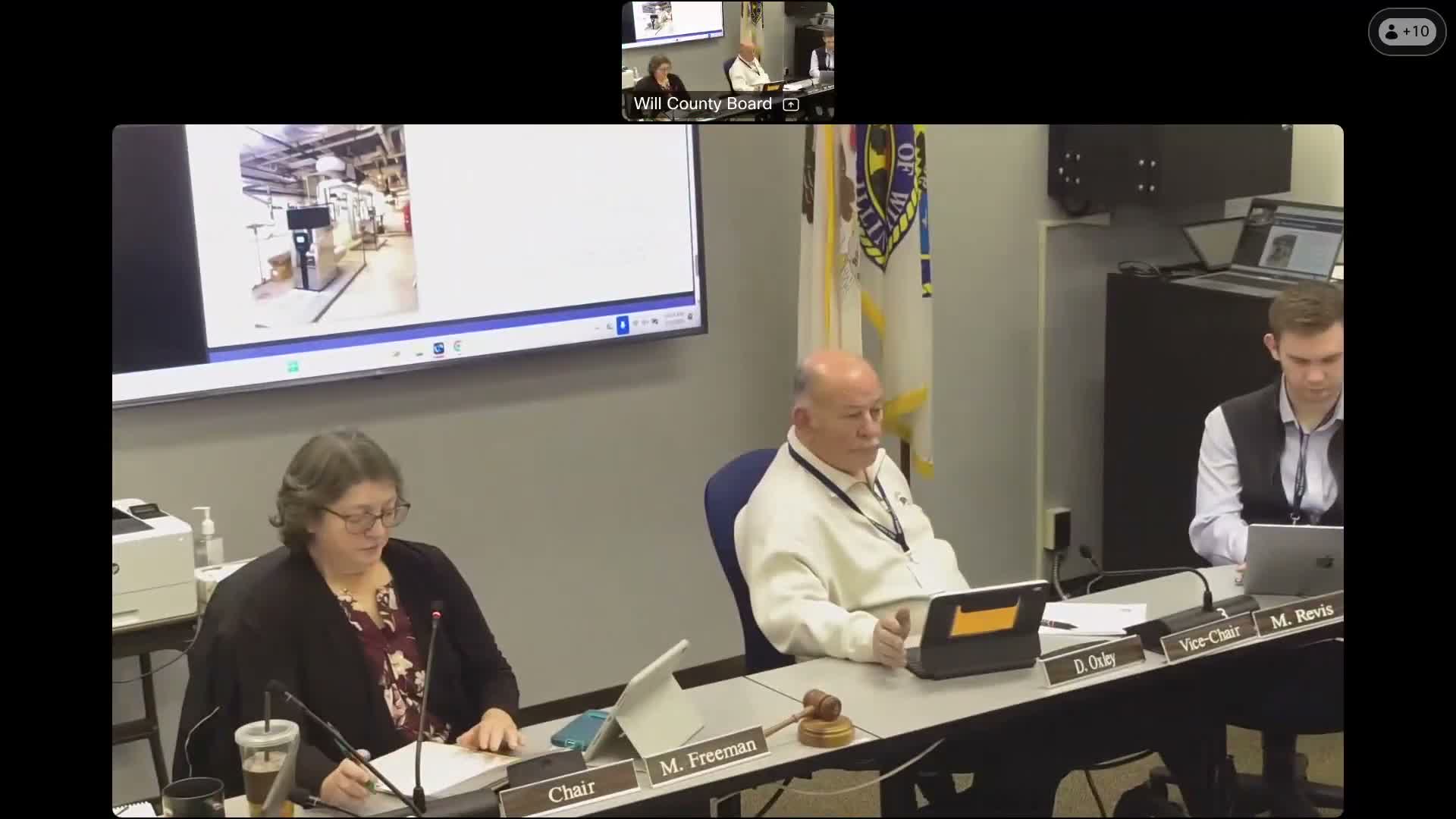
Summary
Jason from Will County IT briefed the committee on AI types, training, backup and data-retention concerns. Members debated whether staff or the committee should draft policy, a motion to direct the chief of staff was withdrawn, and the committee asked staff to run a departments survey and return an outline next month.
Jason, an IT representative, presented technical guidance and cautions on artificial intelligence to the Capital Improvements & IT Committee, distinguishing machine‑learning uses (analytics and embedded features) from generative AI. Jason emphasized training, controlled data access, and records-retention constraints. "When you're designing a policy, you don't necessarily need to say what's acceptable, but you have to define it so that you're actually referencing the type of AI that you're trying to regulate," Jason said.
Mister McGrath, participating as the committee’s legal advisor, advised that a county policy is generally sufficient if the county intends only to govern internal operations, while an ordinance directed at third parties could invite litigation and require outside counsel. "If you're just trying to regulate what the county is doing in-house, all you need is a policy," McGrath said, adding that an ordinance could create avoidable legal exposure.
Member Balich moved to direct the chief of staff to draft an AI policy based on the San Diego ordinance and materials distributed with the agenda; the motion was seconded but later withdrawn. Committee discussion touched on training requirements, closed-system pilots, FedRAMP certification for vendors, controlled access to county data, and the need for backups and documented source material. Jason noted the county has piloted a closed EMA tenant that keeps uploaded emergency documents contained and that some transcription tools have been considered for FedRAMP certification.
Several members raised concerns about job impacts and human oversight. Mister Reavis warned that AI can displace workers and cited figures he said were tied to AI-related job cuts; other members cautioned that those claims require verification but agreed on the need for human review where AI informs decisions. Jason recommended that decisions informed by AI should be verified by humans and that analytics used in decisionmaking must be audited for bias.
Next steps agreed by the committee: staff will survey departments to document current AI use, prepare an outline/policy framework that incorporates committee bullet points and Jason's technical recommendations, and present the outline for committee review next month. No ordinance vote or binding countywide policy was adopted at this meeting; the committee removed the earlier motion to direct the chief of staff and opted for a staff-supported drafting process and a departmental survey.