
Security firms, unions back bill to require equitable adjustments for some long state contracts
Get AI-powered insights, summaries, and transcripts
Subscribe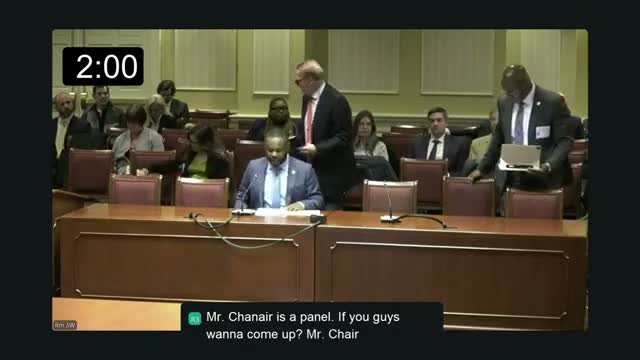
Summary
SB 63 would require certain multi‑year, high‑value state contracts to include equitable adjustment clauses when statutory changes or collective bargaining raise labor costs; supporters—security contractors and SEIU 32BJ—said narrow thresholds (3 years, $2,000,000) and procurement‑officer approval limit state exposure.
Corey McCray and a panel of industry and labor representatives urged the Senate Budget and Taxation Committee to back Senate Bill 63, which would require specified state construction and service contracts to include equitable adjustment clauses for cost increases driven by new state laws or collective bargaining agreements.
Steve Amate, executive director of the National Association of Security Companies, said the bill protects security officers and ensures contractors can seek price adjustments when compensation costs increase mid‑contract. "Contract price adjustments are also made when new federal or state laws go into effect during the contract period that increase employee compensation costs," Amate said. Leon Beresford, an executive at Admiral Security Services, described the bill’s limits: it targets multi‑state contracts of three years or more with dollar thresholds intended to restrict state exposure.
Union testimony came from Alexander Morgan of SEIU Local 32BJ, who said the provision would preserve negotiated wage increases and reduce turnover, which he connected to public‑facility safety. Private‑sector witnesses such as Nick Perris of Allied Universal described the business risk when union negotiations and contract start dates do not align and asked that the state be willing to negotiate equitable adjustments rather than force vendors to absorb unanticipated costs.
Supporters and legal experts said the bill is not a blank check to contractors: procurement lawyers and trade groups argued that claimants would still need to demonstrate entitlement and that agency negotiation and oversight would limit state liability. Committee members pressed witnesses on how often such adjustments arise and whether contracts could already include such clauses; witnesses said the bill targets relatively few contracts annually and that prior versions of the measure have been narrowed to reduce fiscal exposure.
No formal vote was recorded during the hearing; sponsors asked for a favorable report with agreed technical amendments concerning procurement officer authority for specific agencies.